Showing posts with label Oak woodland. Show all posts

Friday, June 15, 2007

DeForest Park

CommunityWalk Map - DeForest Park

DeForest Park Sign

DeForest Park's 26 acres are mostly developed,although the southern end of the park has a nature trail that goes through riparian forest, woodlands, and wetlands. Although the developed part of the park is well maintained, this natural area suffers from litter, vandalism, and homeless encampments. As with any of the parks in this guide I would recommend strongly exploring this park with a friend, rather than on your own.

Woodland

That said, there are some unusual habitats to see at DeForest Park which are scarce in the rest of the city. The main trail of the park winds through a riparian forest that contains cottonwoods, coast live oaks, willows, and nonnative pepper trees. Small spurs from the main trail take you closer to wetlands that run along the levee of the LA River.

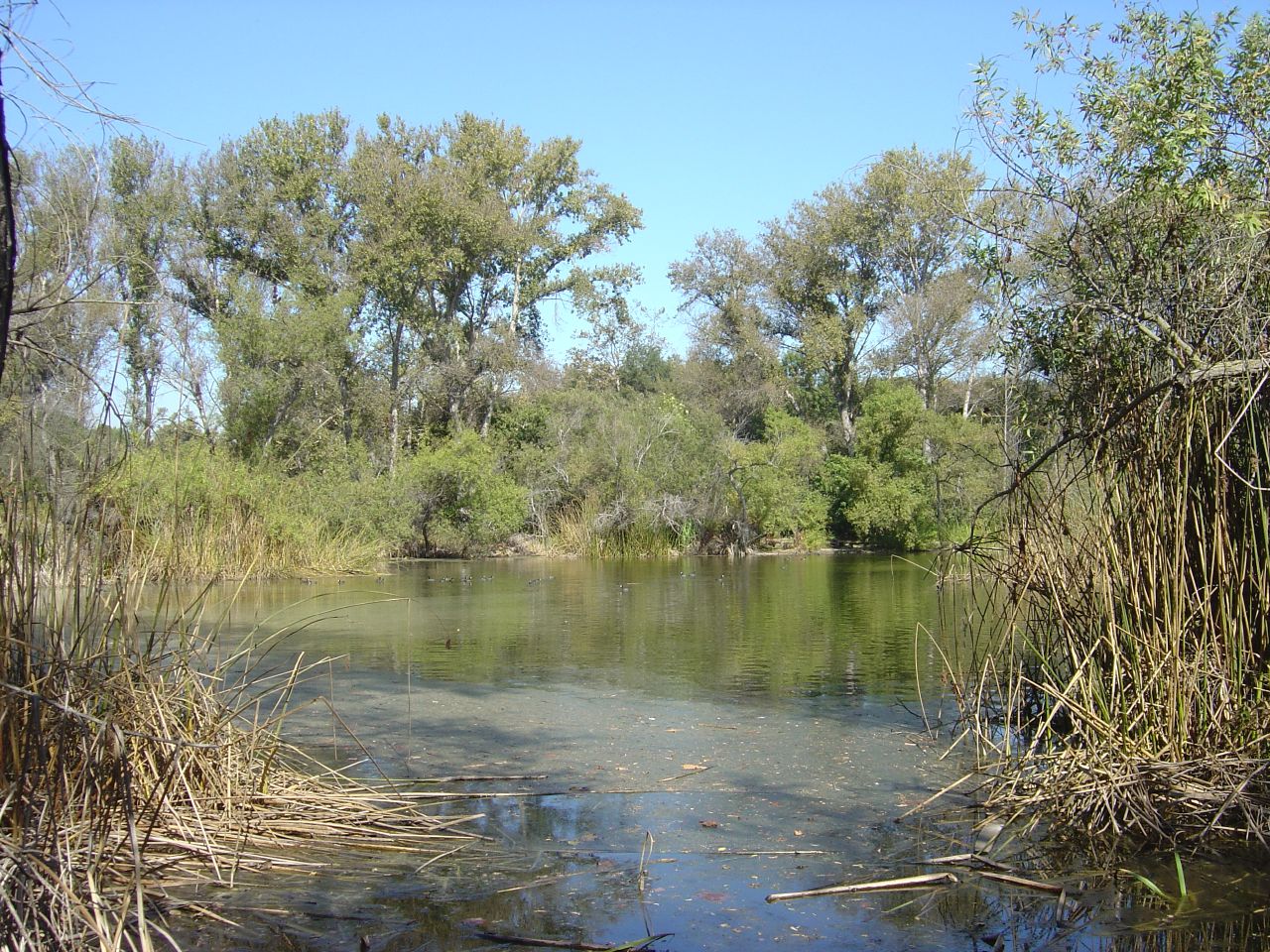
Wetland areaWetland area

Riparian zones are stream-side habitats. Typically, riparian zones are dense forests made up of trees that can tolerate the special challenges of living next to a stream. These challenges incude saturated, oxygen-poor soils; abrasion from suspended rocks during floods; and a rapidly changing, dynamic landscape (with frequent erosion and burial in sediment). Many riparian trees, such as California bay trees, adapt to this tumultuous landscape by resprouting easily when they get knocked over.

Cottonwood leavesCottonwood bark
Freemont cottonwood trees (Populus freemontii) have distinctive heart-shaped leaves and thick, light-gray bark. These trees reach impressive stature (up to ~70 feet tall) and in our region are often the largest native trees around.

At DeForest Park, the riparian forest is composed largely of Freemont cottonwoods (Populus fremontii), willows (Salix spp.) as well as many nonnative trees, such as pepper trees (Schinus spp). The growth is dense, and much loved by the abundant birds, squirrels, and lizards of the park.

Beneath the cottonwoods are thickly grown wetlands, full of bulrushes, sedges, and cattials. Many wetland birds nest in these tall plants and eat their seeds.

Rush
Rushes, unlike grasses, have round, hollow stems. The flower structure is also different, but it can be hard to tell without a magnifying lense.

Sedge
Sedges are another grass-like plant common in wetlands. In California, most are low-growing species. They can be distinguished from grasses by their triangular, or edged leaves.

Polygonum lapathifolium
Elegant willow weeds (Polygonum lapathifolium)grow in saturated soils. Other flowering plants may be common at certain times of year.

At the south end of the park (near the Long Beach Boulevard bridge), the riparian forest gives way to an open, weedy grassland, although the wetlands continue down here as well. There are plenty of wildflowers in this area, as well as birds, so be sure to pay a visit if you make it down to the park. Although the plants are mostly nonnative, there are a few interesting native plants, and plenty of beauties.

Unknown flower
[Need ID]

Datura wrightii
Tolguacha, or false jimson weed (Datura wrightii), has huge, trumpet-like flowers and soft, velvety silver-green leaves. Indigenous people used it for medicinal purposes, and to make a psychoactive drug.
Datura fruit
The fruit of tolguacha (Datura wrightii) has an unusual spikey skin. The dried flower usually remains attached.

California croton
California croton (Croton californica) is an attractive silvery-gray shrub.
California croton-male flowers
The small flowers of croton are inconspicuous, but very attractive to bees and other insects.

Castor bean
The castor bean (Ricinus communis) is a weedy shrub from Africa. The flower stalk has male flowers at the bottom, and female flowers (mature fruits in this photo) and the top.

Bindweed
Morning glory, or bindweed (Convolvulus arvensis) grows up the stalks of a bulrush. Unlike the native morning glory (genus Calystegia), this flower has small bracts a few inches below the flower.

Common thistle
Common thistle (Cirsium vulgare), a very widspread nonnative weed.


There is abundant wildlife to observe in this park. Keep your eyes and ears pealed!

Mourning dove-trimmed
A mourning dove (Zenaida macroura) gathers nesting material.

Western fence lizards (Sceloporus occidentalis) are pretty common in this park, and coastal whiptails (Aspidoscelis tigris stejnegeri) as well. On the trail, I encountered a very large snake skin in perfect condition:

kingsnake skin

The previous owner was probably a California kingsnake (Lampropeltis getula californiae). This specimen was huge--over 6 feet long! However, few of this species ever get even half that size. The adults have bold black and white patterning. Although a harassed snake may bite a person, it is non-venemous and is not considered dangerous. It is a constrictor, strangling its prey before eating it. Kingsnakes eat rodents, lizards, and even other snakes! In fact, rattlesnakes are a preferred prey item, and kingsnakes are thought to be immune to their venom.

Coastal Los Angeles and Orange County is home to a unique type of kingsnake, called the "Long Beach morph" or the "grease king." These types (morphs) have complicated patterns, with blotches of cream on a dark background (as opposed to the stripes or rings more typical of this subspecies). Herpetologists have found evidence for a genetic basis for the unusual pattern, suggesting that Long Beach is home to a distinct population of this species. Given the extensive development of this morph's home range, it is not surprisng that it is now extremely rare in the wild. Future research may determine if this morph is genetically distinct to warrant protection as an endangered species.

Thursday, June 14, 2007

El Dorado Regional Park

CommunityWalk Map - El Dorado

Without a doubt, El Dorado represents the most siginificant inland natural area in Long Beach. Over 100 acres of natural habitats are maintained within the 400 acre park (the rest of the park being devoted to active and passive recreation).

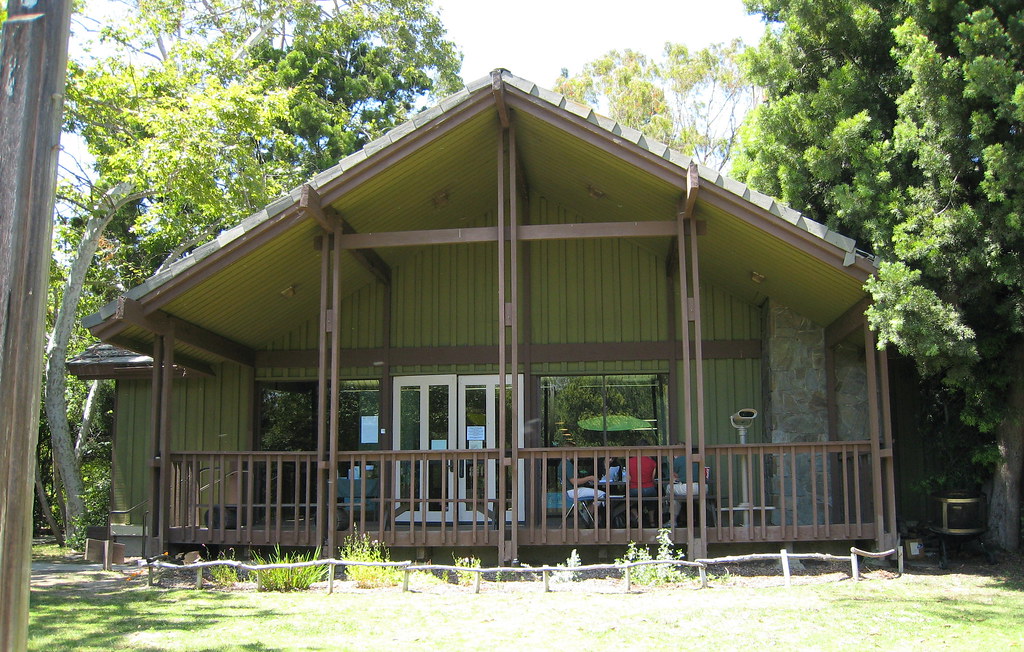
El Dorado Nature Center
El Dorado Park has a great Nature Center with all sorts of displays and activites for children. They also organize events for adults, such as night-walks and bird ID classes. Unfortunately, the Nature Center has been recently vandalized by some very inconsiderate people. (What kind of person would smash a urinal?)

El Dorado Park is large enough to have honest-to-goodness trails! Three, in fact.

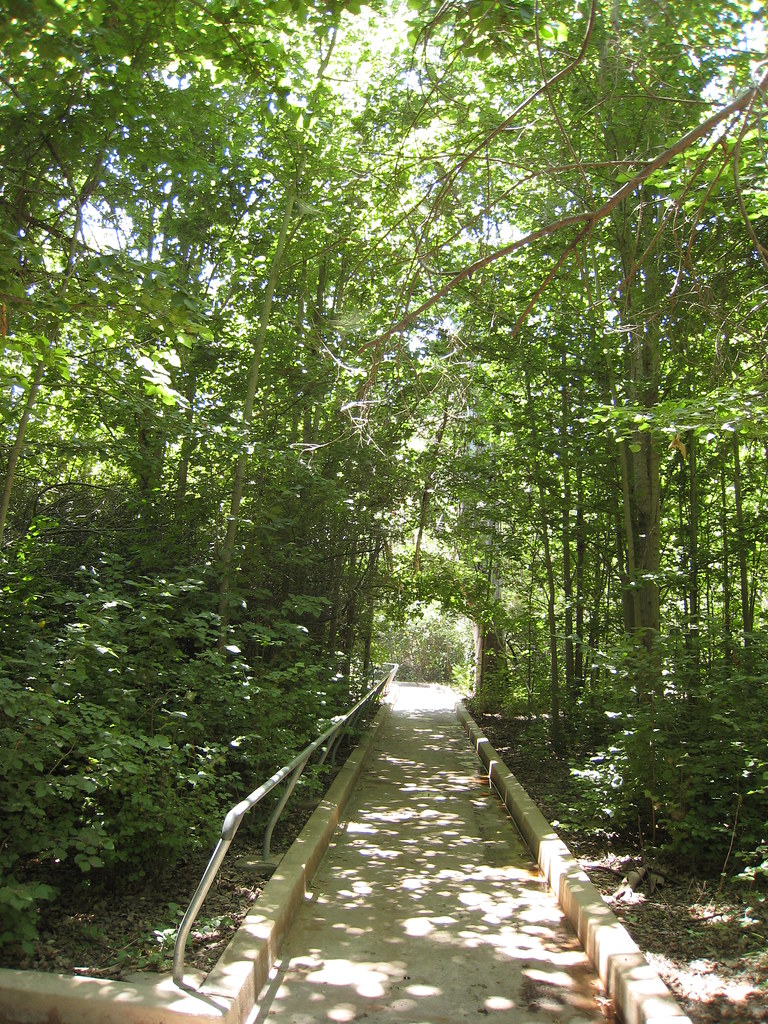
Paved trail
The shortest trail is only 1/4 a mile, and is entirely paved, with railing. This trail winds through a dense forest near the Nature Center, and is completely accessible to wheelchairs.

In forests, trees grow densley, shading out most of the sunlight from the forest floor. (In contrast, there's more space between the trees in a woodland--see below.) Forests are uncommon in the lower elevations of Southern California, because few areas have enough soil moisture year-round.

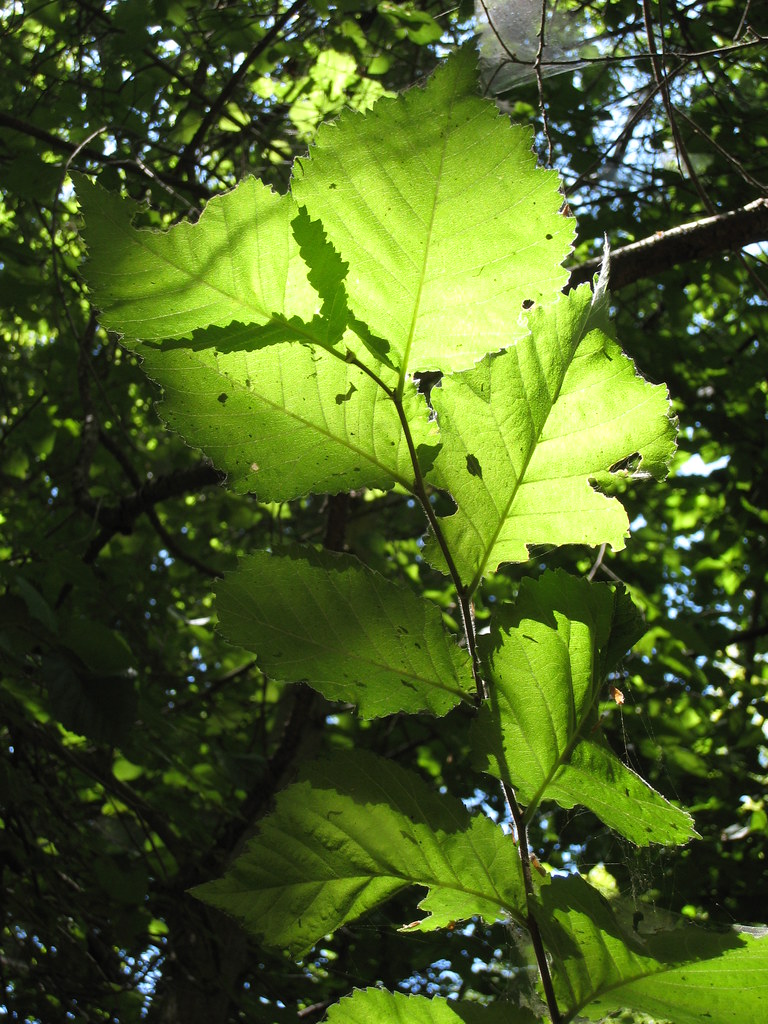
Sun through alder leaves
The leaves of this white alder (Alnus rhombifolia) catch what little light makes it through the dense upper canopy of leaves.

The lower levels of a forest is generally full of saplings and vince that get just enough sunlight to keep themselves alive. These plants are waiting for the bigger shade-producing trees to fall over or die, flooding the floor with sunlight. Until then, they simply wait and try to stay alive.

Animal life is bustling here. The thick growths of branches are festooned with spiderwebs, which catch all sorts of insects.

Deathtrap
A spider in its web waits for its next meal. The carcass of a damselfly shows that the spider has been eating well.

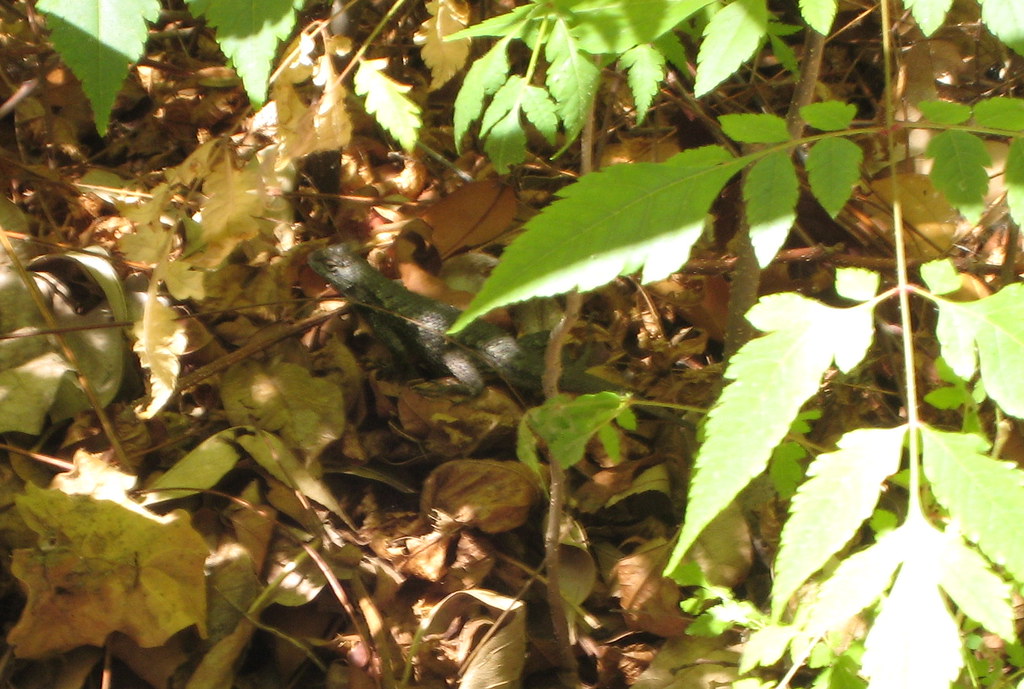
Western fence lizard
Western fence lizards (Sceloporus occidentalis are common in nearly every part of the park, but you are most keenly aware of them in the forest, where they rustle loudly in the dried leaves.

The end of the paved trail (or entrance, depending on which way you do the loop) takes you through a small open grassland, where many native wildflowers were recently planted (as well as a few non-native ones, for some reason).

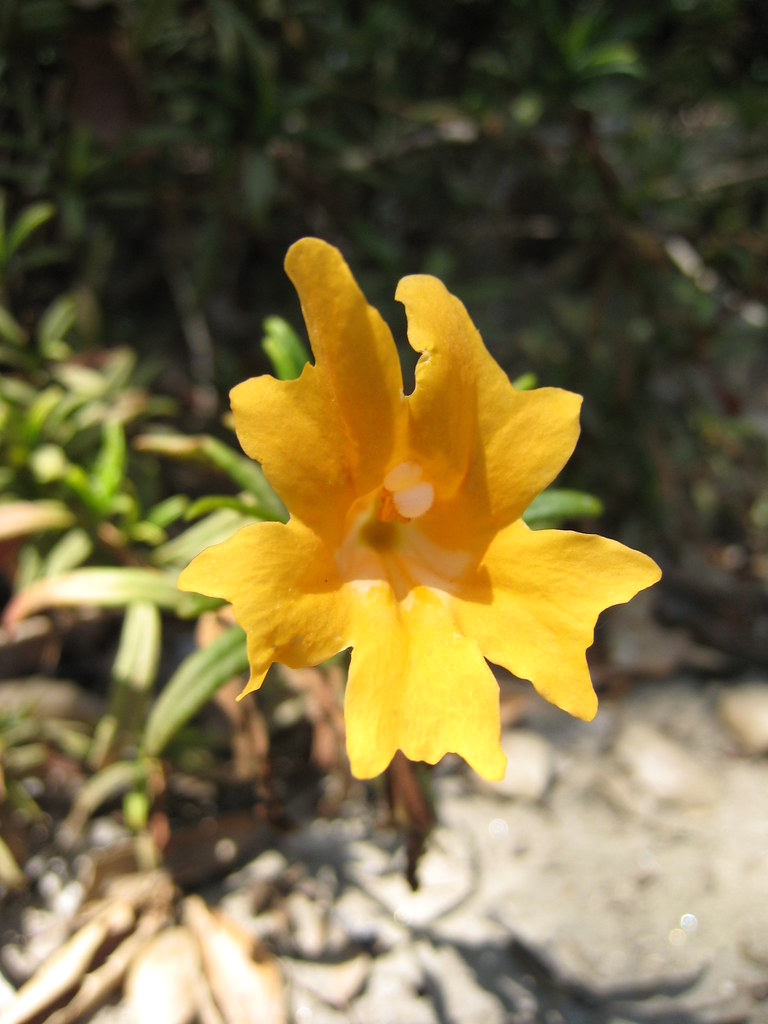
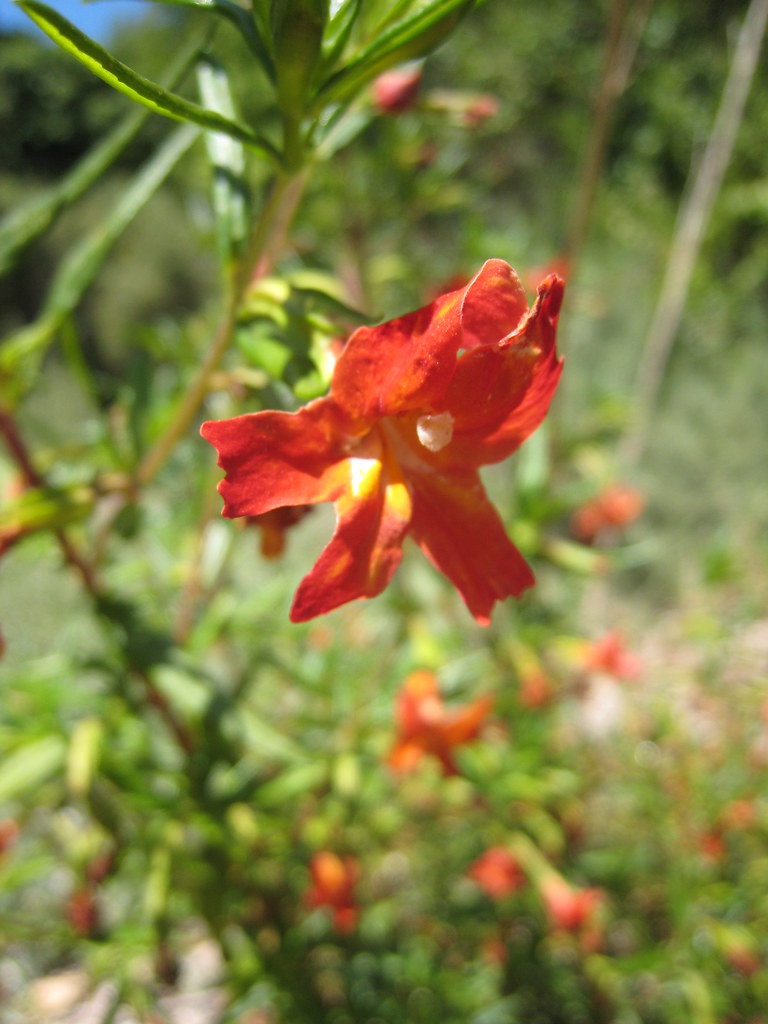
Sticky monkey flowerSticky monkey flower
Sticky monkey flower (Mimulus aurantiacus) is one of the showiest native wildflowers. It ranges in color from yellow to red.

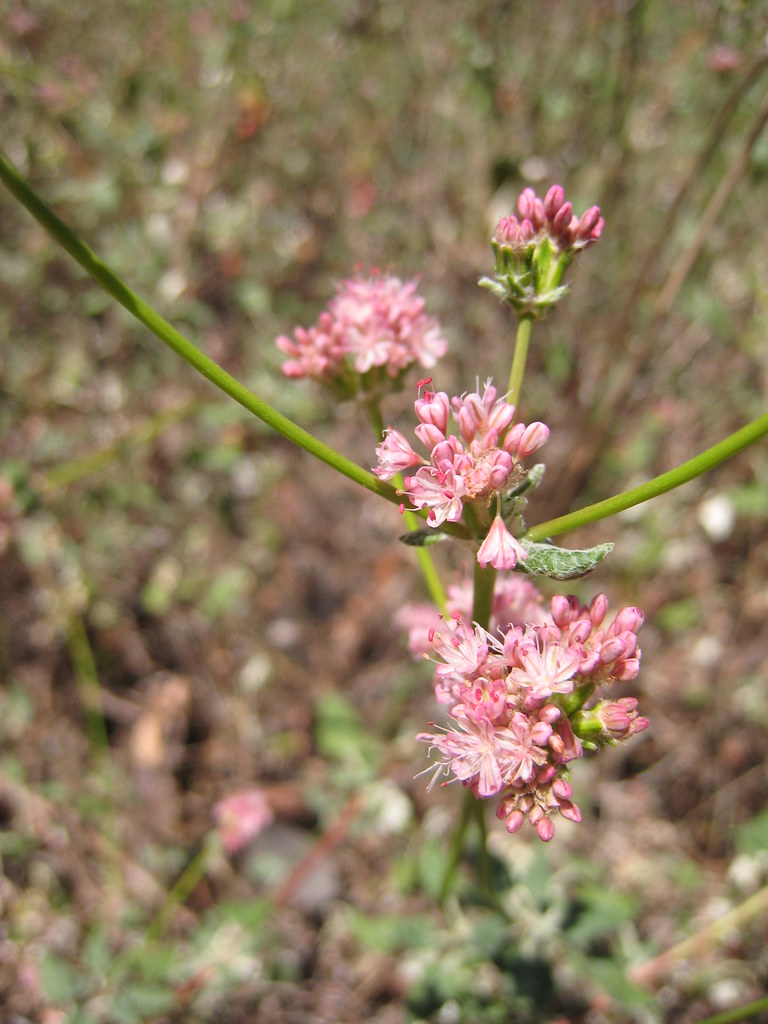
Cliff buckwheat
Several species of buckwheat grow in the park. This photo is sea cliff buckwheat (Eriogonum parvifolium). Nearby, you can find California buckwheat (E. fasciculatum, and giant buckwheat (E. giganteum).

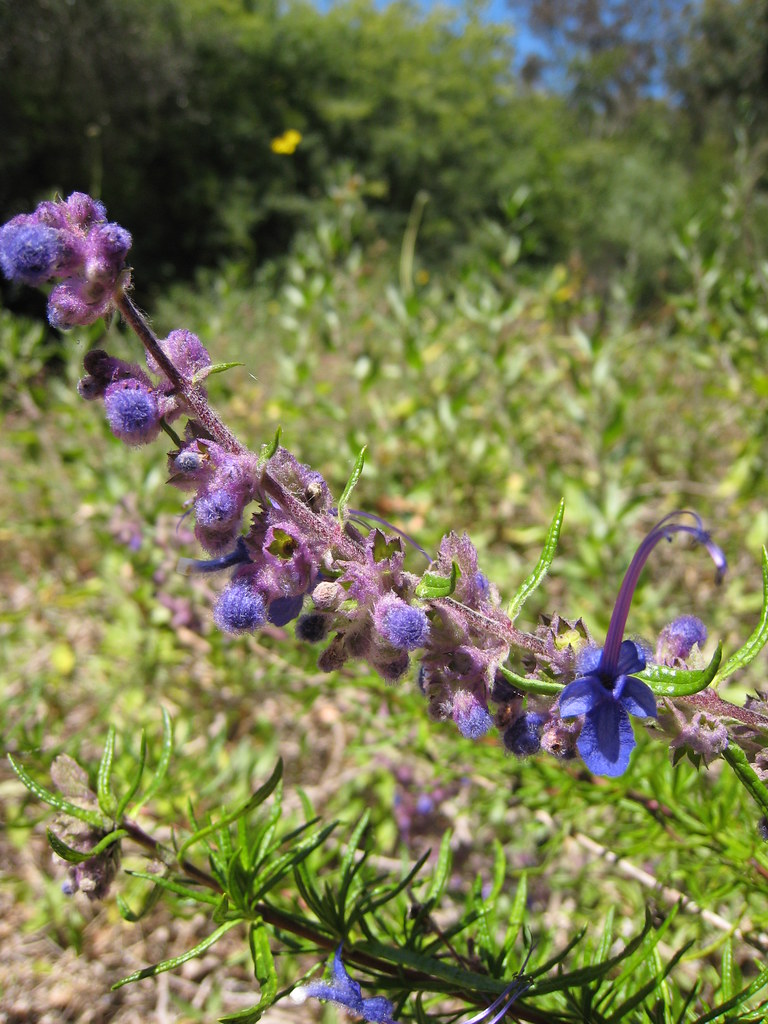
Woolly bluecurls
Woolly bluecurls (Trichostema lanatum) has bizarre and striking flowers.

California encelia
Bush sunflower (California encelia), getting munched by a caterpillar.

Western vervain
Western vervain (Verbena lasiostachys)


There are two longer trails (1 mile and 2 mile), which, though unpaved, are still extremely easy. The longer trail passes through some unshaded areas, so be sure to wear sun protection.

Thanks to its size, touring El Dorado will show you a large variety of habitats: oak woodlands, forest, coastal sage-scrub, grassland, chaparral. In addition, there are several different aquatic habitats: two large ponds, a stream connecting them, plus their fringing wetlands.

All paths take you near the two large ponds in the pond, as well as the stream connecting them.

Turtles are among the most conspicuous wildlife you will see in the ponds.

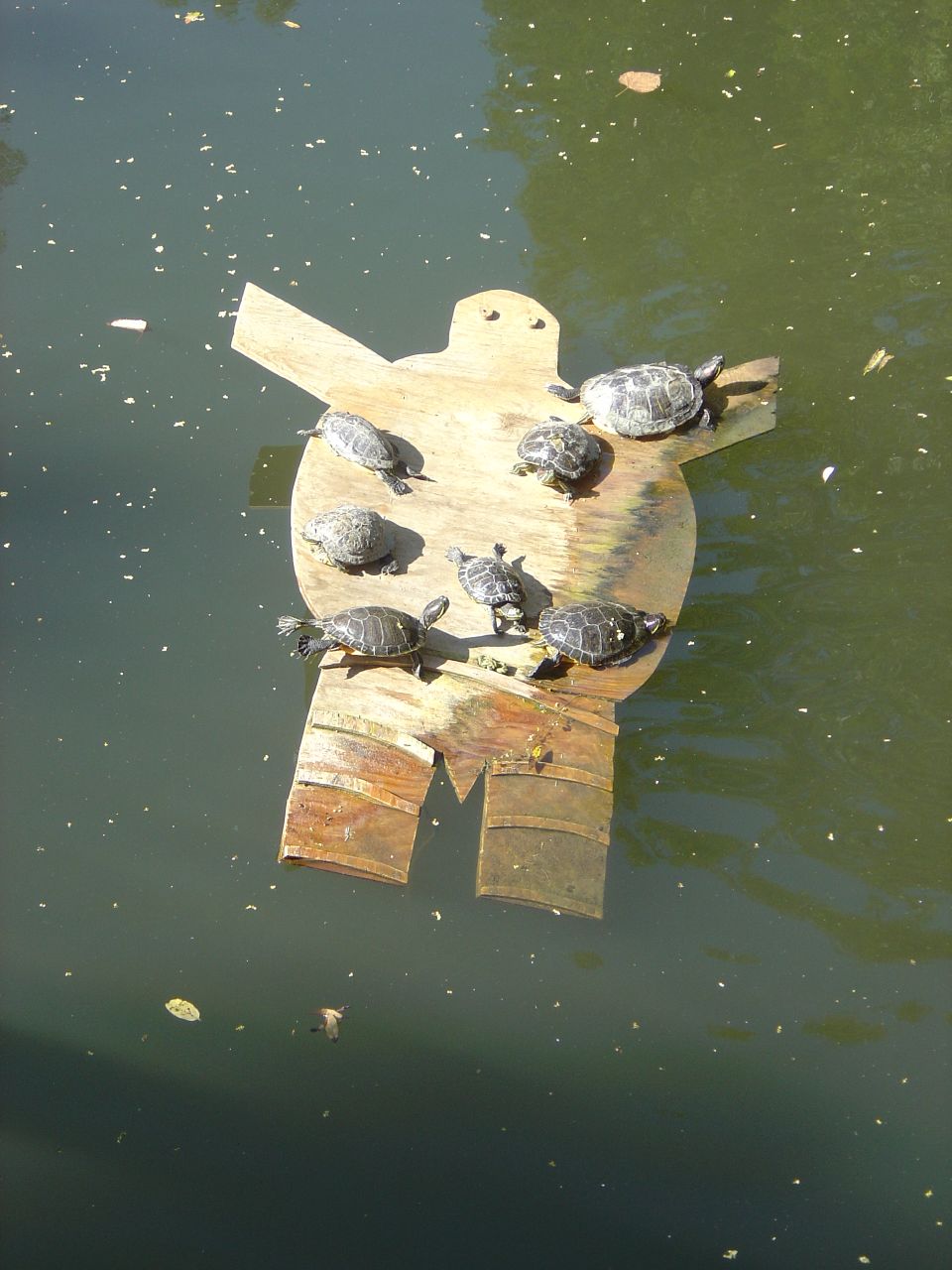
Turtle floats near the nature center:
Turtle floats
Although the floats may be somewhat garish, they provide excellent basking for the ponds' turtles (mostly exotic red-eared sliders). This allows them to be viewed close to shore by children, but still safe and secure from predators.

Slider and map turtle
Red-eared slider (Trachemys scripta elegans), left, and Ouachita map turtle (Graptemys ouachitensis), right. Both are nonnative turtles widely sold in the pet trade.

Typically, you will see many red-eared sliders (Trachemys scripta elegans). However, I saw one Ouachita map turtle (Graptemys ouachitensis) among them. Both are probably escaped pets, although the sliders have undoubtedly established a stable population in the park.

Black phoebes
Two black phoebes (Sayornis nigricans) hang out near the water's edge.

Lots of birdlife is attracted to the wetland. Fly-catchers, such as these black phoebes (Sayornis nigricans) perch near the water and catch flying insects "on-the-wing." Pretty impressive to watch!

In addition to the typical wetland cattails, rushes, and sedges, you can find some unusual plants growing near the pond:

Yerba mansa
Lizard tail, or Yerba mansa (Anemopsis californica)

Oak Woodland:
El Dorado Park - Oak woodland

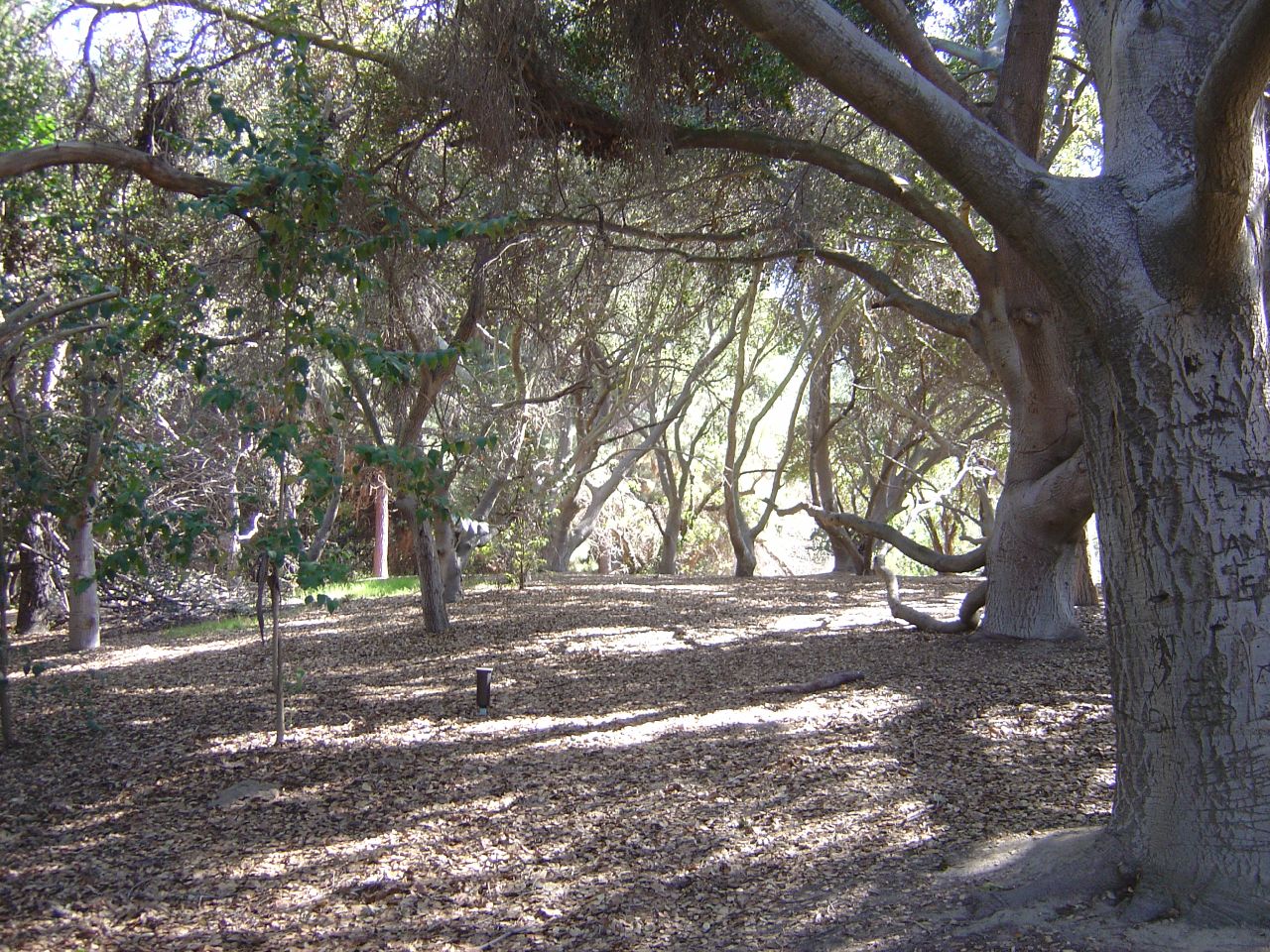
Coast live oaks (Quercus agrifolia) intersperse with willows, alders, and other trees and shrubs to form small, open woodlands. Unlike a forest, woodlands have well-spaced trees, and it is generally easy to see through the vegetation. Smaller herbaceous plants may grow densely in the understory.

Coastal sage-scrub
El Dorado park - coastal sage-scrubPower lines

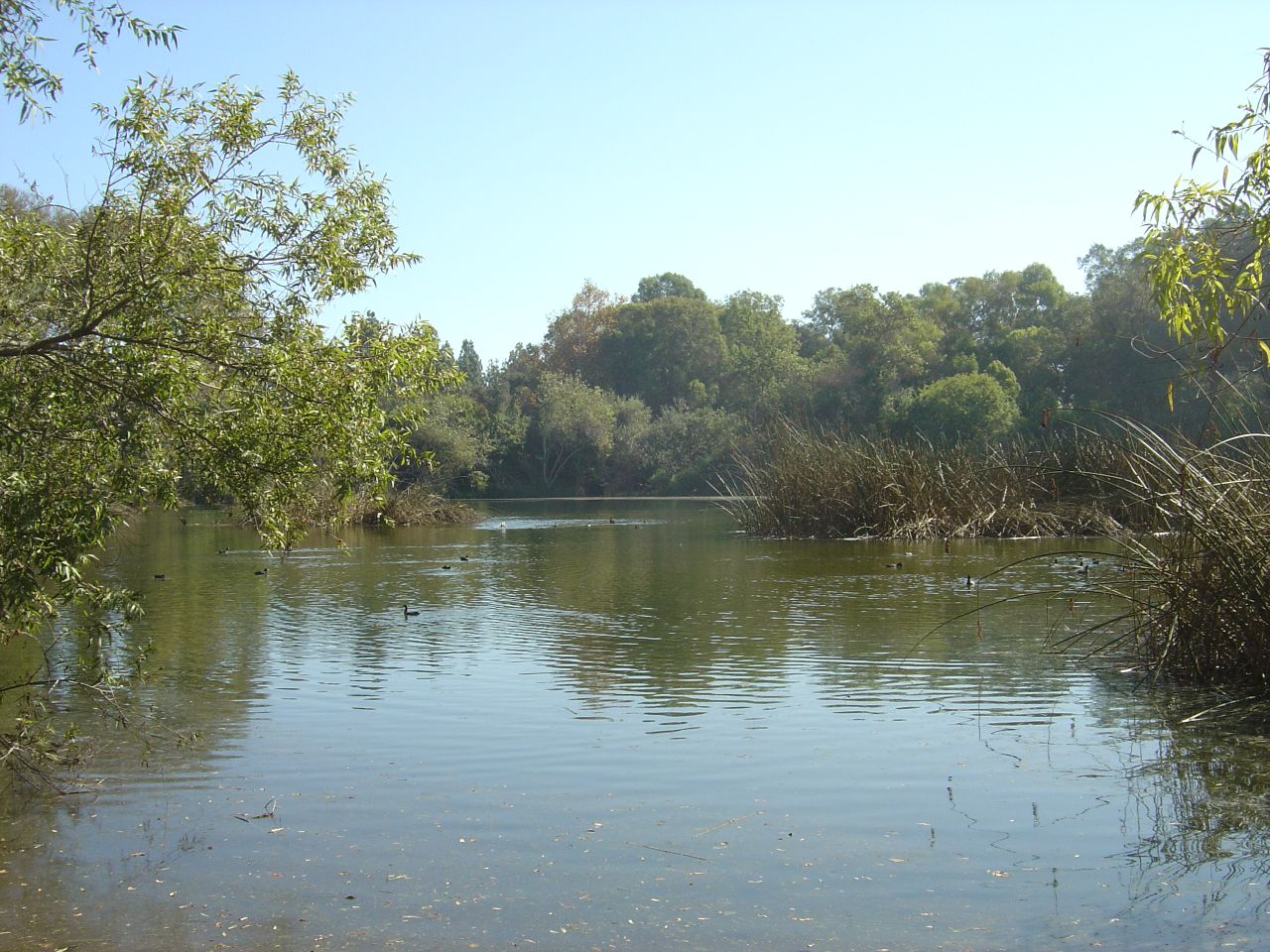
Southern lake, with fringing wetlands and plenty of coots, ducks, and other waterfowl:
El Dorado lake
Marsh

Toyon, or holly (Heteromeles arbutifolia:
Toyon Berries

The El Dorado chapter of the Audubon Society maintains a check-list of birds for this park.

Although much of the park has native vegetation, there are quite a few nonnative ornamental plants too. I'm not sure if the nonnatives that have been planted are considered invasive and a threat to Long Beach's wildlands, but I would prefer if the park remained a sanctuary for the native plants of California.

Plans are in development to create treatment and habitat wetlands in the more developed portions of El Dorado between Carson Street and Spring Street. This project would expand wetland and riparian habitat in the park, and prevent pollution from entering the San Gabriel River.

To get to the Nature Center, take the 102 bus (M-F) or the 173, and walk east down Spring Street from Studebaker.