Showing posts with label Chaparral. Show all posts

Monday, July 2, 2007

West San Gabriel River Parkway (Lakewood)

CommunityWalk Map - San Gabriel River Parkway

The San Gabriel River Parkway and Monteverde Park in Lakewood are, perhaps, better examples of landscaping with native vegetation than native habitat restoration. The Parkway has a very manicured appearance, with long stretches of grass intersperesed with native plant gardens. Perhaps this appearance is a result of the newness of the park. The older portions at the southern end of the Parkway have larger patches of sage-scrub, more similar in appearance to the Long Beach Greenbelt.

Trail

None of this means that the Parkway isn't a beautiful place to visit, or that it lacks the wildlife benefits of more wild parks. The bird-life here is terrific, as flocks of finches and mourning doves gorge themselves on seeds, phoebes catch insects mid-air, and scrub jays squawk aggressively to establish their territories. I believe that the the River Parkway is an excellent example of how environmental concerns can be accomodated in even non-wildland parks, and I hope that this approach gets more widespread.

There are two parts to the parkway: Phase I (the larger, southern portion, between Carson Street and Del Amo Boulevard) and Phase II (the smaller northern portion, just above Del Amo). In between is Monteverde Park, which is partially landscaped by native plants and attepmts to recreate a few natural communities.


Carson street entrance
The trail winds sinuously through the parkway from one garden-like planting to the next. There is little shade in the park, as most of the trees are still very short. Perhaps in a few years, this park will be a bit more shady.

Trees of the Parkway:

Sycamore
Western sycamore (Platanus racemosa) is a typical riparian tree, growing along-side streams and in moist canyons. It has distinctive mottled bark, and the fruits hang in little strings.

Valley oak
Valley oaks (Quercus lobata) grow well in moist areas. Old trees can reach impressive stature. The tree drops its broad, thin leaves in the winter. Poor regeneration has been documented throughout the state, and this oak is now increasingly threatened.

Coast live oak
The coast live oak (Quercus agrifolia) is far more common in our region than the valley oak. It keeps its hard brittle leaves throughout the year.


The beds are lushly planted with wildflowers typical of coastal sage-scrub, such as California sage, buckwheat, and Mexican elderberry. Maby of these plants have showy flowers and are very attractive to butterflies. The berries and seeds are also important food for wildlife.

Bee on elderberry flowers
Honey bee (Apis mellifera) visiting the flowers of a Mexican elderberry (Sambucus mexicana)

Sage and carpenter bee
A huge carpenter bee (Xylocarpa sp.) visits the flowers of Cleveland sage (Salvia clevelandii)

Scrubjay in western redbud
A scrub-jay (Aphelocoma californica) in a western redbud tree (Cercis occidentalis)


There are plenty of wildflowers to enjoy here:

Salvia mellifera
Cleveland sage (Salvia clevelandii)

Creeping mahonia
Creeping majonia (Berberis aquifolium repens)

Bush sunflower
Bush sunflower (Encelia californica)

Unknown
[Need ID]

Unknown
[Need ID]

Unknown
[Need ID]

Unknown
[Need ID]


Among the plantings are nonnative butterfly bushes (Buddleja davidii). This plant was an unfortunate choice to include in the park, as Buddleja is a major invasive pest and a threat to native plants.

Butterfly bushButterfly Bush

Outside the gardens, the grass grows a bit wild, and many wildflowers proliferate here.

Shaggy lawn
The unmowed grass reflects a wildlife-friendly and water-wise approach to park management.

Swale
The landscape is countoured to direct the flow to the river. The vegetation in the swale provides some treatment for the stormwater. In these wetter areas, the wildflowers are most abundant.

Linanthus
Flax-flowered linanthus (Linanthus liniflorus) is one of the more common and shower flowers in this area.

Aster
An aster (probably Erigeron sp.)

Yarrow
Yarrow, or milfoil (Achillea millefolium) has strongly aromatic leaves.

Heliotrope
Heliotrope (Heliotropium curassavicum)


In very wet areas of the grass, stands of cattails grow.

Typha domingensis
Typha domingensis
Southern cattail (Typha domingensis) is distinguished from other species by the wide space between the upper male flowers and the lower female flowers.


At the southern end of the parkway, the more mature plantings take on a more genuinely wild appearance, like a natural sage-scrub habitat. These areas are profuse with flowering sages, buckwheat, and sagebrush.

Poppy and sage
The orange poppies (Eschscholzii californica)and the purple Cleveland sage flowers (Salvia clevelandii) make an excellent contrast!

Sagebrush and encelia
The silvery gray California sagebrush (Artemesia californica) is one of the most important plants of the coastal sage-scrub. Many species of birds rely on its leaves for cover and its seeds for food. The yellow flowers behind belong to the bush sunflower (Encelia californica).

Buckwheat and sagebrush
California buckwheat (Eriogonum fasciculatum) provides white-to-pink flowers all year.

Sage


A large expanse of sage provides a striking note for its foliage as much as for its flowers.


In addition to coastal sage-scrub, the southern end of the parkway has a few chaparral areas as well. Many, like the California lilac, have conspiculous flowers.

Ceanothus
California lilac (Ceanothus sp.)

Manzanita gall
Manzanita (Arctostaphylos sp.). The bright red leaves are galls caused by the manzanita leaf-gall aphid (Tamalia coweni).


Although the park rambles along the San Gabriel River, there is no real effort to connect the park with the river. Such a task is nearly impossible given the extensive channelization here. Although these concrete channels effectively eliminate the risk of floods they also eliminate nearly all value to wildlife. Wetland and riparian plants cannot establish on the concrete bed, and few fish or insects can withstand the super-high water velocity and lack of protective cover. Sadly, such habitat destruction has afflicted most of the lower San Gabriel River, and almost all of the Los Angeles River. Most of Southern California's rivers have suffered a similar fate. Careful planning and prevention of sprawl is necessary to protect the few unchannelized rivers left in the region.

But just as a crack in the sidewalk may be enough habitat for a wildflower, some wildlife manage to find some foraging in the San Gabriel channel. The river is best appreciated from the bikepath along the east side of the river.

Bikepath

Near the Parkway, slight shifitng of the soil has allowed shallow flooding over a short stretch of river. In these low-velocity shallows, a few bugs can hang out, attracting birds who eat them.

Spillover

Some of the birds you may see here:

Five stilts
Black-necked stilts (Himantopus mexicanus)

Great blue heron and stilts
Great blue heron (Ardea herodias) (plus some more stilts)

Stilts and killdeer
Small, but noisy killdeer (on the left, Charadrius vociferus), with yet more stilts.

Swallow
A cliff swallow (Petrochelidon pyrrhonota

Thursday, June 14, 2007

El Dorado Regional Park

CommunityWalk Map - El Dorado

Without a doubt, El Dorado represents the most siginificant inland natural area in Long Beach. Over 100 acres of natural habitats are maintained within the 400 acre park (the rest of the park being devoted to active and passive recreation).

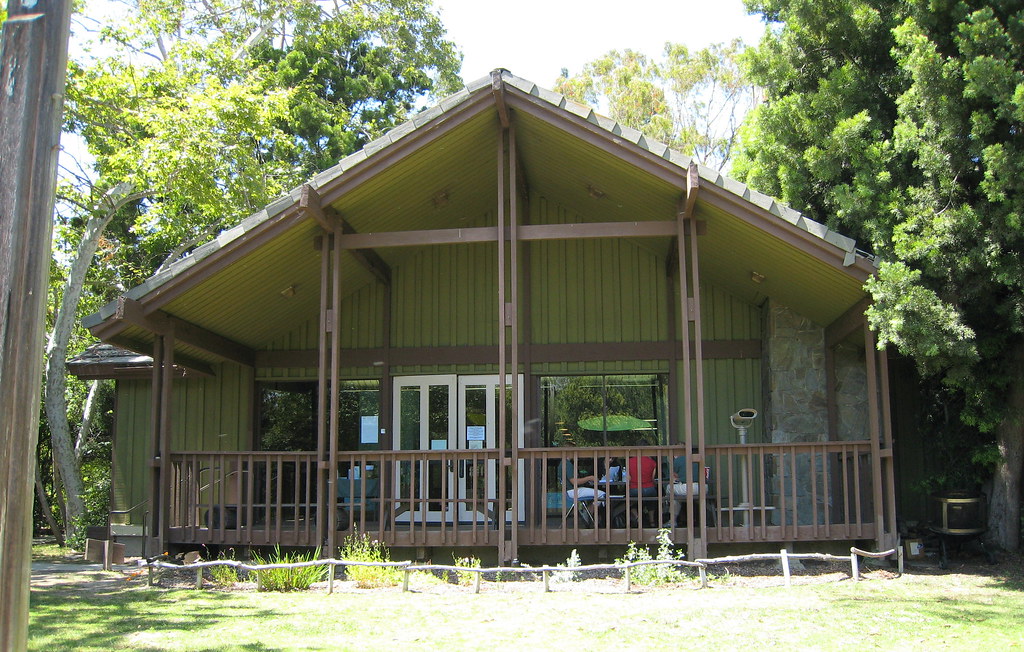
El Dorado Nature Center
El Dorado Park has a great Nature Center with all sorts of displays and activites for children. They also organize events for adults, such as night-walks and bird ID classes. Unfortunately, the Nature Center has been recently vandalized by some very inconsiderate people. (What kind of person would smash a urinal?)

El Dorado Park is large enough to have honest-to-goodness trails! Three, in fact.

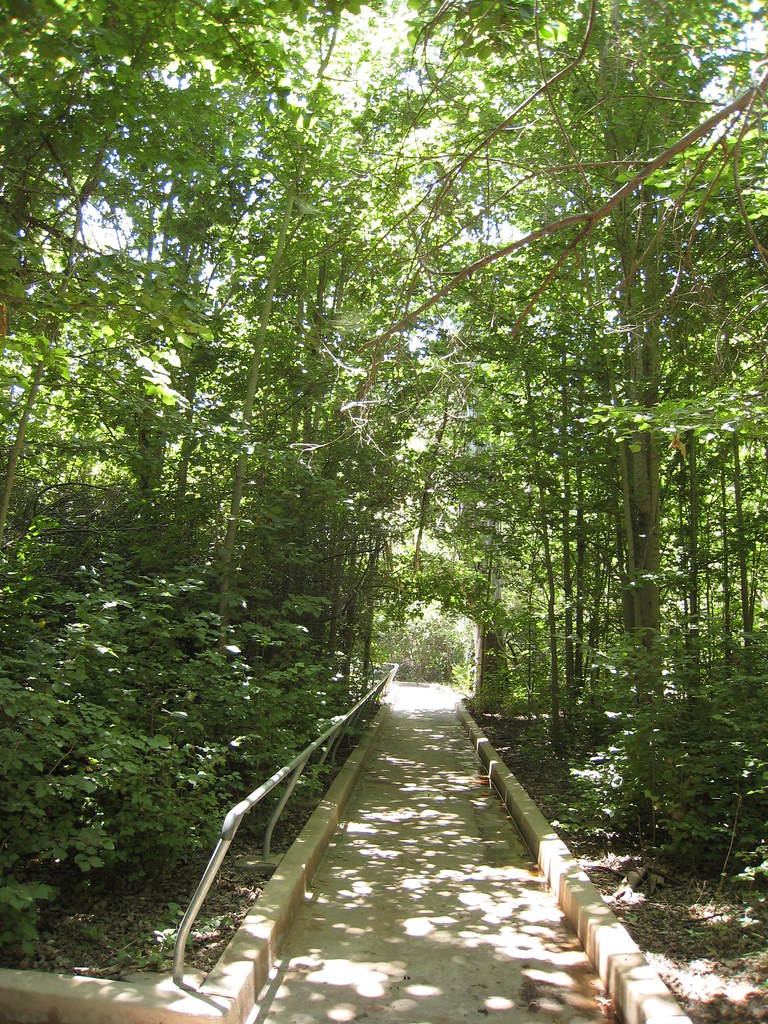
Paved trail
The shortest trail is only 1/4 a mile, and is entirely paved, with railing. This trail winds through a dense forest near the Nature Center, and is completely accessible to wheelchairs.

In forests, trees grow densley, shading out most of the sunlight from the forest floor. (In contrast, there's more space between the trees in a woodland--see below.) Forests are uncommon in the lower elevations of Southern California, because few areas have enough soil moisture year-round.

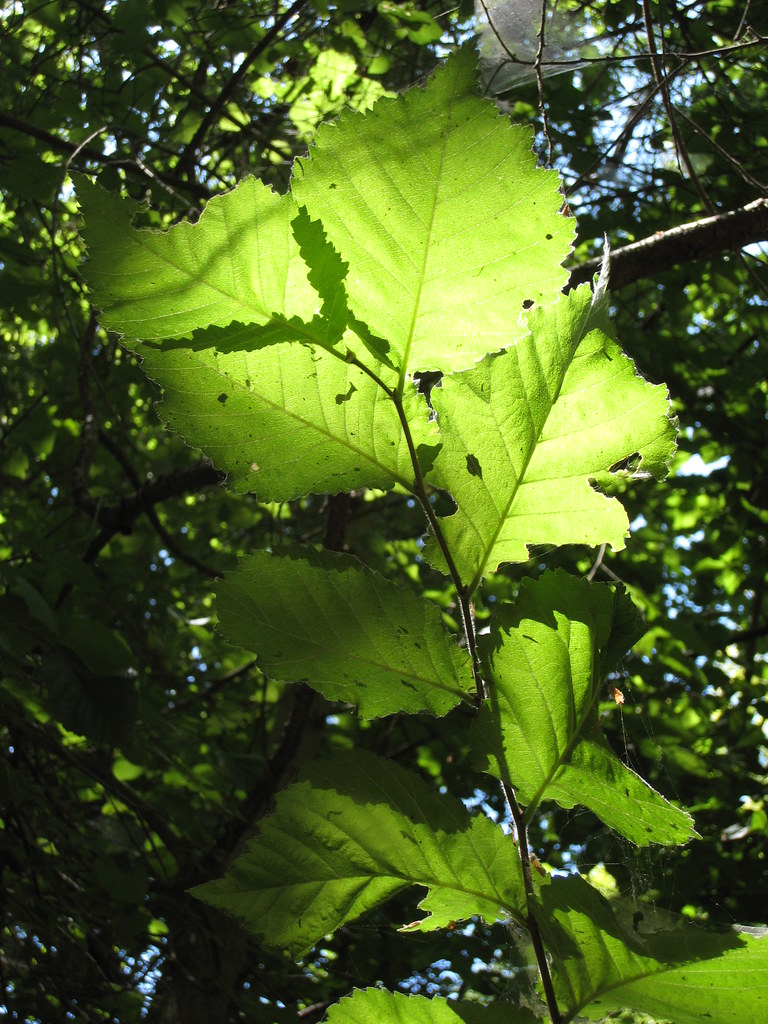
Sun through alder leaves
The leaves of this white alder (Alnus rhombifolia) catch what little light makes it through the dense upper canopy of leaves.

The lower levels of a forest is generally full of saplings and vince that get just enough sunlight to keep themselves alive. These plants are waiting for the bigger shade-producing trees to fall over or die, flooding the floor with sunlight. Until then, they simply wait and try to stay alive.

Animal life is bustling here. The thick growths of branches are festooned with spiderwebs, which catch all sorts of insects.

Deathtrap
A spider in its web waits for its next meal. The carcass of a damselfly shows that the spider has been eating well.

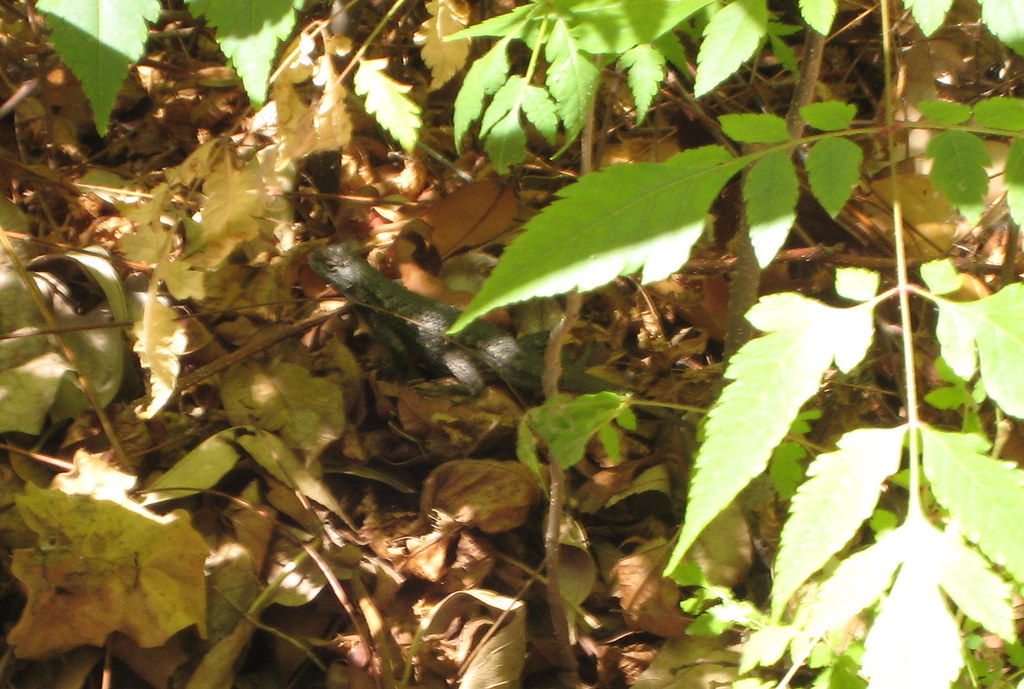
Western fence lizard
Western fence lizards (Sceloporus occidentalis are common in nearly every part of the park, but you are most keenly aware of them in the forest, where they rustle loudly in the dried leaves.

The end of the paved trail (or entrance, depending on which way you do the loop) takes you through a small open grassland, where many native wildflowers were recently planted (as well as a few non-native ones, for some reason).

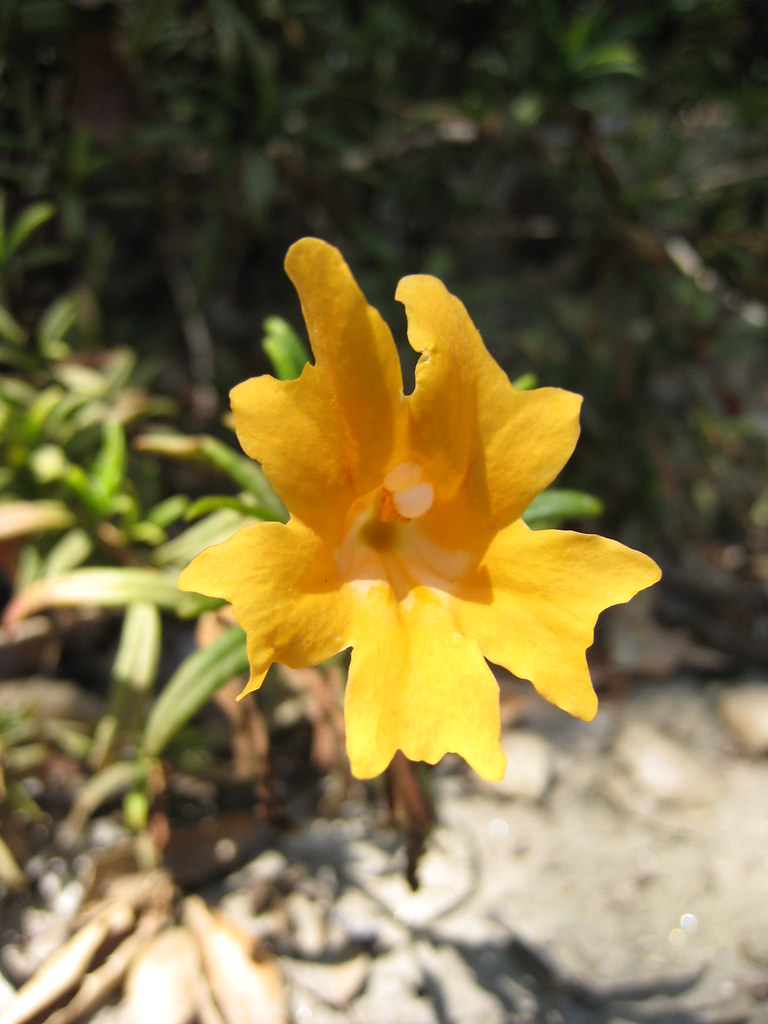
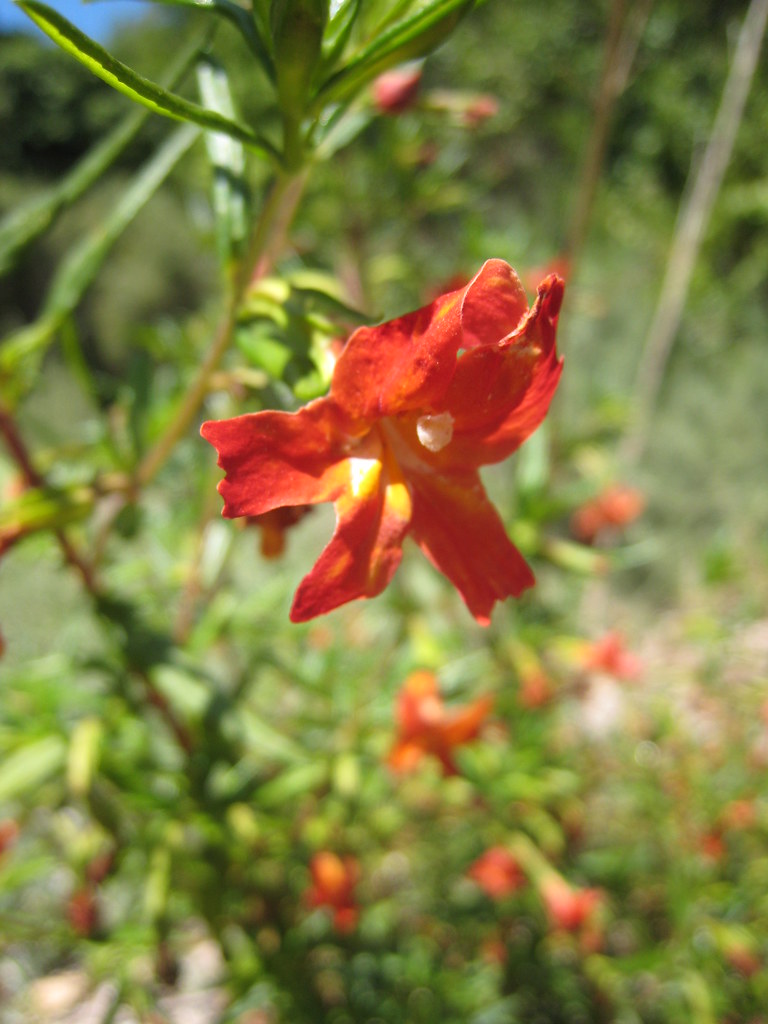
Sticky monkey flowerSticky monkey flower
Sticky monkey flower (Mimulus aurantiacus) is one of the showiest native wildflowers. It ranges in color from yellow to red.

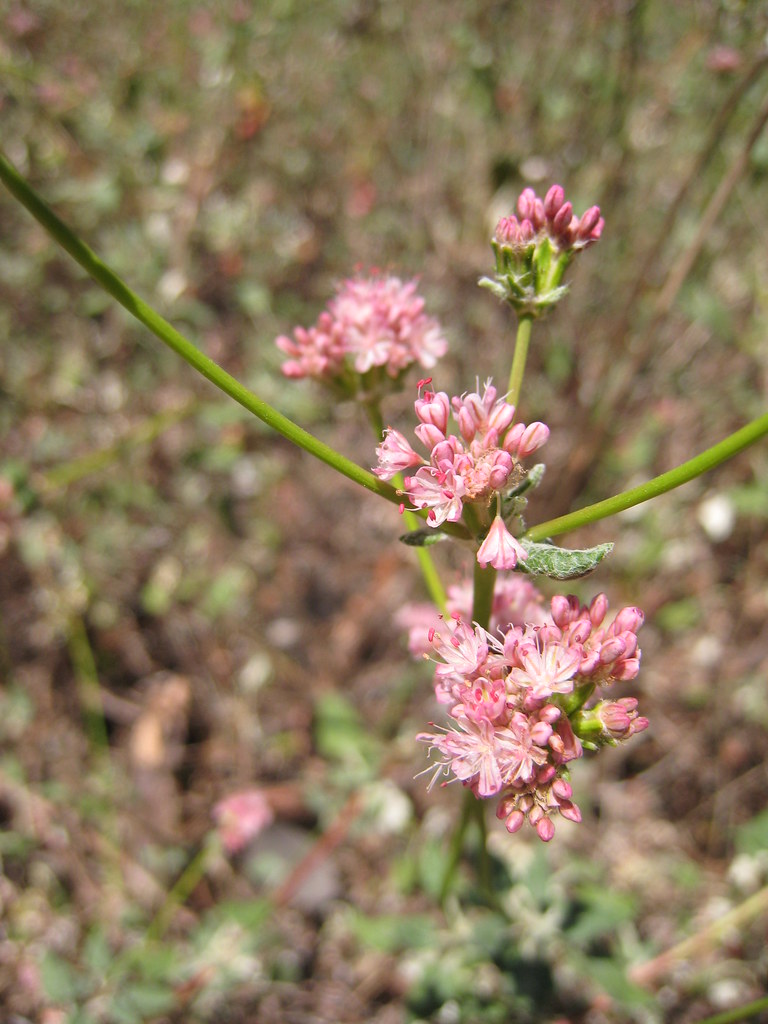
Cliff buckwheat
Several species of buckwheat grow in the park. This photo is sea cliff buckwheat (Eriogonum parvifolium). Nearby, you can find California buckwheat (E. fasciculatum, and giant buckwheat (E. giganteum).

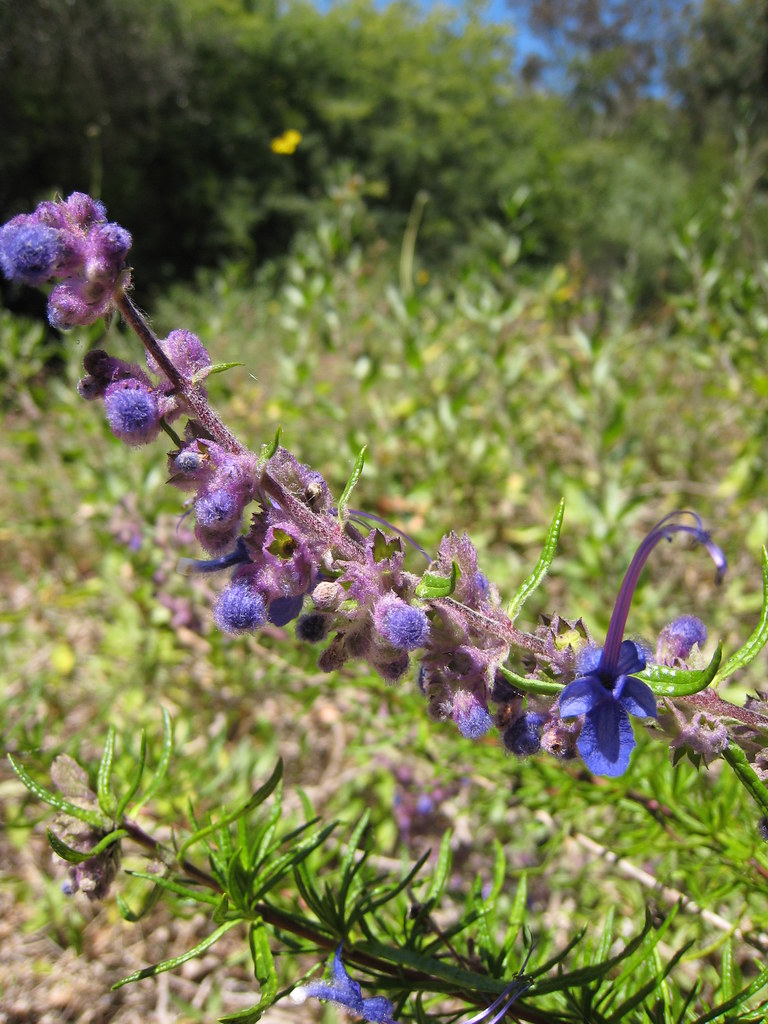
Woolly bluecurls
Woolly bluecurls (Trichostema lanatum) has bizarre and striking flowers.

California encelia
Bush sunflower (California encelia), getting munched by a caterpillar.

Western vervain
Western vervain (Verbena lasiostachys)


There are two longer trails (1 mile and 2 mile), which, though unpaved, are still extremely easy. The longer trail passes through some unshaded areas, so be sure to wear sun protection.

Thanks to its size, touring El Dorado will show you a large variety of habitats: oak woodlands, forest, coastal sage-scrub, grassland, chaparral. In addition, there are several different aquatic habitats: two large ponds, a stream connecting them, plus their fringing wetlands.

All paths take you near the two large ponds in the pond, as well as the stream connecting them.

Turtles are among the most conspicuous wildlife you will see in the ponds.

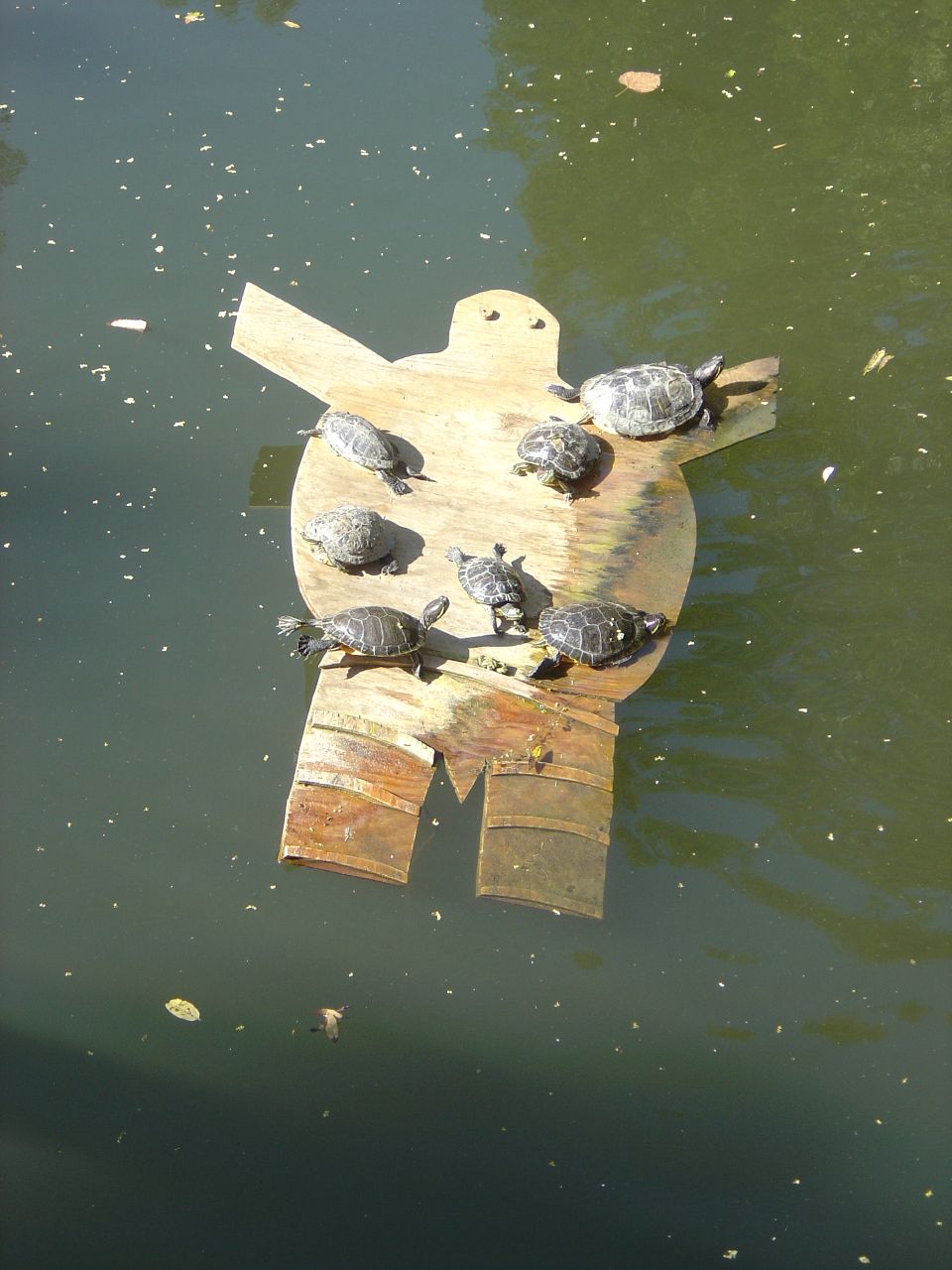
Turtle floats near the nature center:
Turtle floats
Although the floats may be somewhat garish, they provide excellent basking for the ponds' turtles (mostly exotic red-eared sliders). This allows them to be viewed close to shore by children, but still safe and secure from predators.

Slider and map turtle
Red-eared slider (Trachemys scripta elegans), left, and Ouachita map turtle (Graptemys ouachitensis), right. Both are nonnative turtles widely sold in the pet trade.

Typically, you will see many red-eared sliders (Trachemys scripta elegans). However, I saw one Ouachita map turtle (Graptemys ouachitensis) among them. Both are probably escaped pets, although the sliders have undoubtedly established a stable population in the park.

Black phoebes
Two black phoebes (Sayornis nigricans) hang out near the water's edge.

Lots of birdlife is attracted to the wetland. Fly-catchers, such as these black phoebes (Sayornis nigricans) perch near the water and catch flying insects "on-the-wing." Pretty impressive to watch!

In addition to the typical wetland cattails, rushes, and sedges, you can find some unusual plants growing near the pond:

Yerba mansa
Lizard tail, or Yerba mansa (Anemopsis californica)

Oak Woodland:
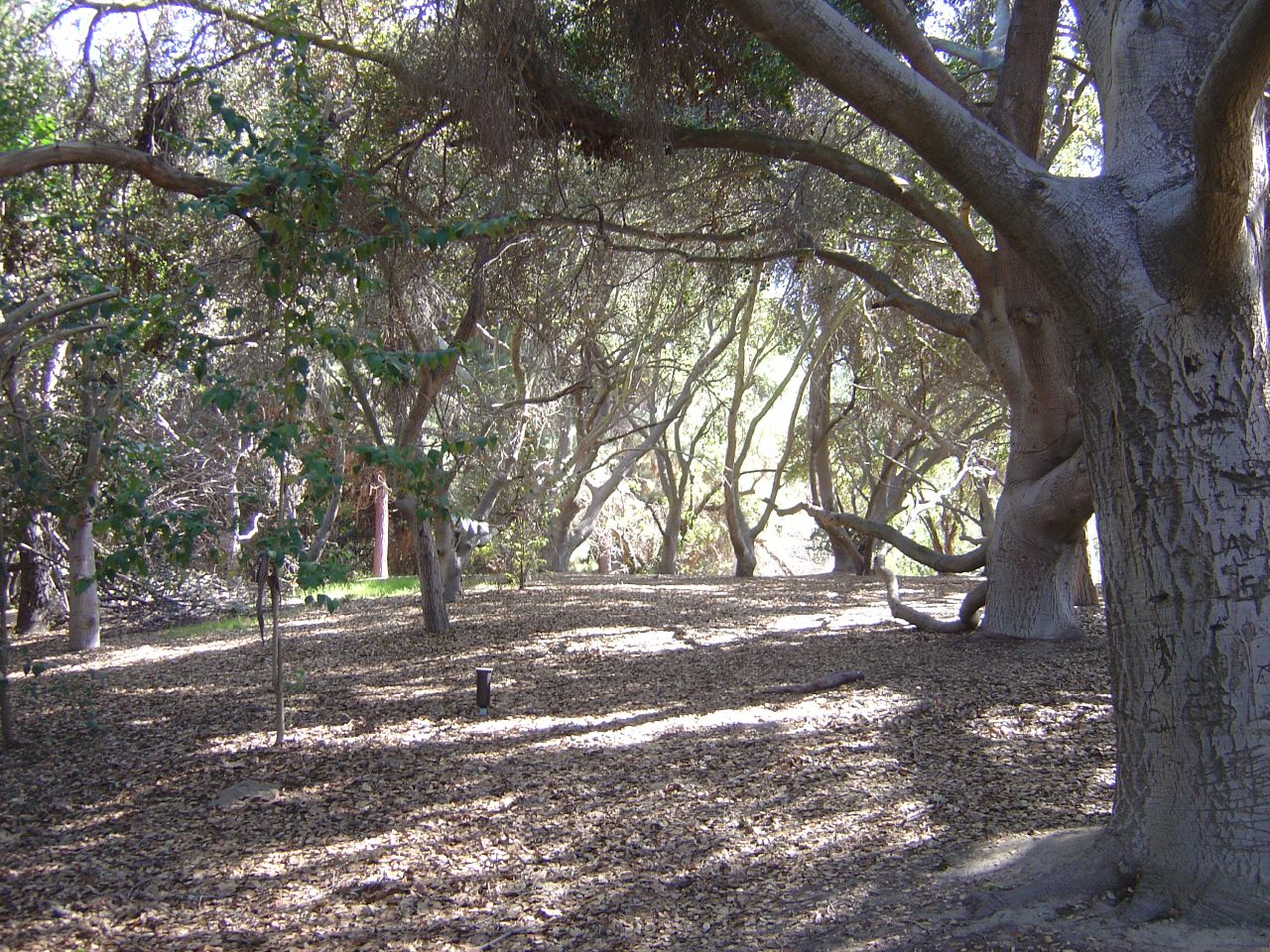
El Dorado Park - Oak woodland

Coast live oaks (Quercus agrifolia) intersperse with willows, alders, and other trees and shrubs to form small, open woodlands. Unlike a forest, woodlands have well-spaced trees, and it is generally easy to see through the vegetation. Smaller herbaceous plants may grow densely in the understory.

Coastal sage-scrub
El Dorado park - coastal sage-scrubPower lines

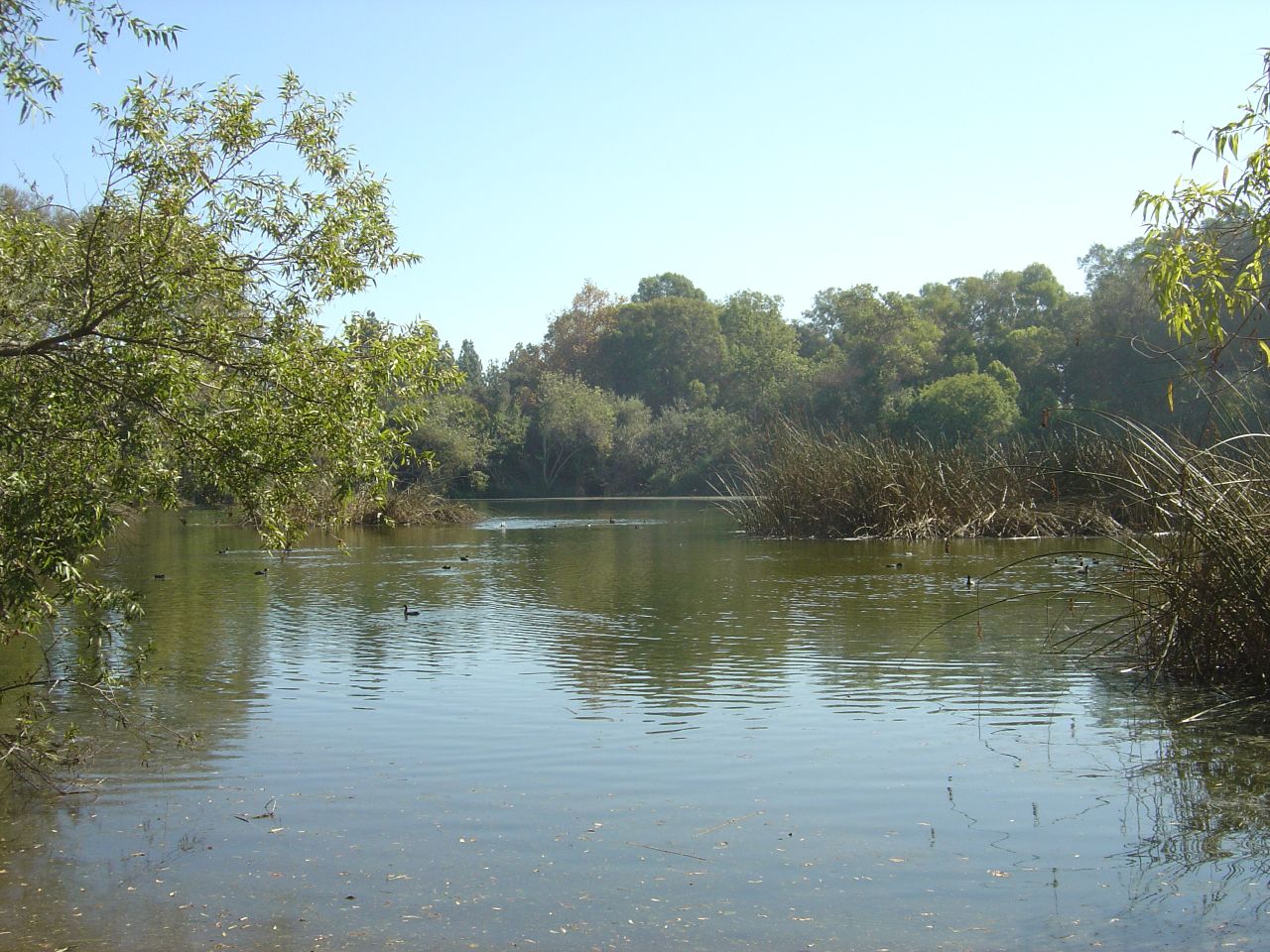
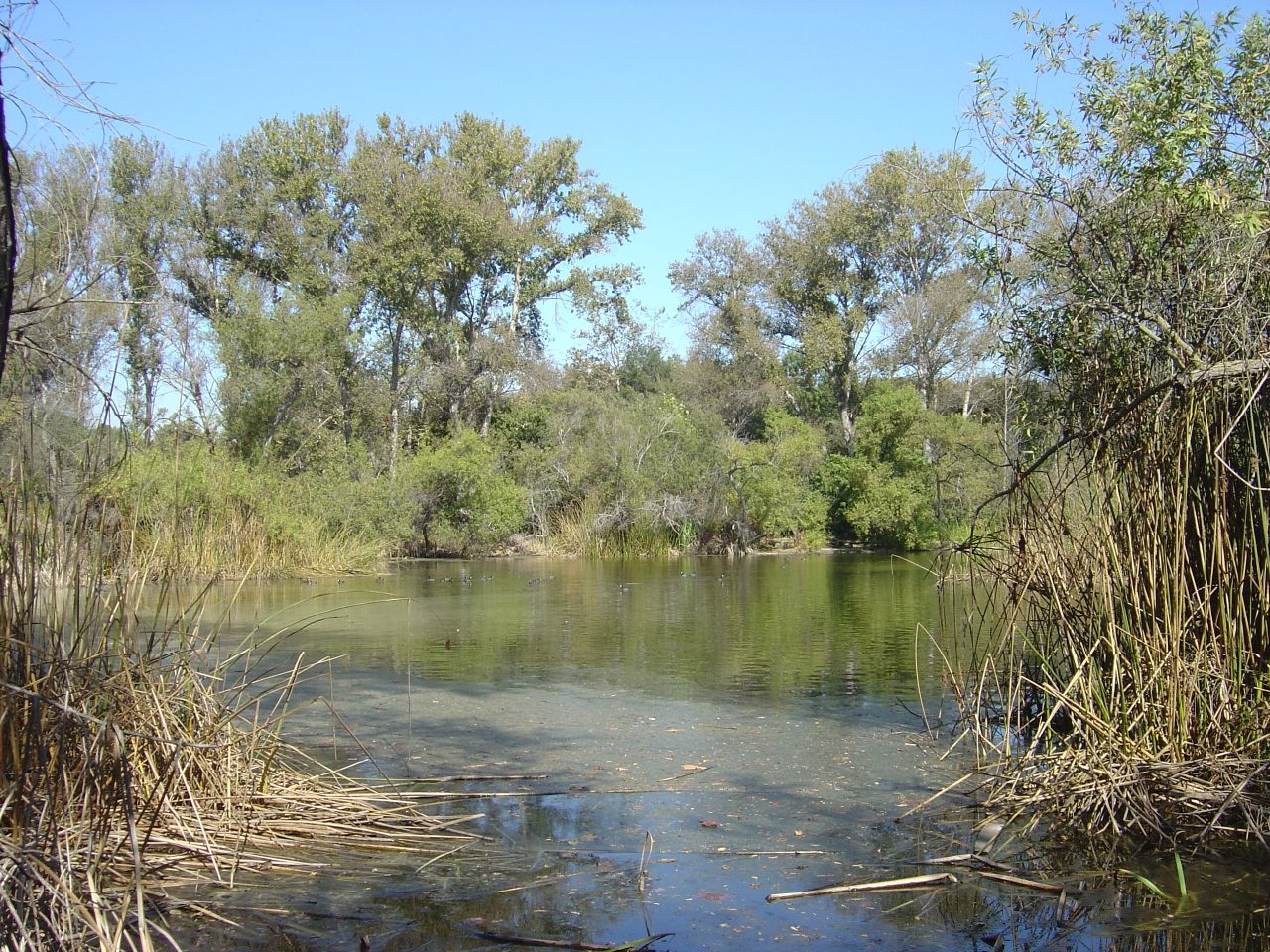
Southern lake, with fringing wetlands and plenty of coots, ducks, and other waterfowl:
El Dorado lake
Marsh

Toyon, or holly (Heteromeles arbutifolia:
Toyon Berries

The El Dorado chapter of the Audubon Society maintains a check-list of birds for this park.

Although much of the park has native vegetation, there are quite a few nonnative ornamental plants too. I'm not sure if the nonnatives that have been planted are considered invasive and a threat to Long Beach's wildlands, but I would prefer if the park remained a sanctuary for the native plants of California.

Plans are in development to create treatment and habitat wetlands in the more developed portions of El Dorado between Carson Street and Spring Street. This project would expand wetland and riparian habitat in the park, and prevent pollution from entering the San Gabriel River.

To get to the Nature Center, take the 102 bus (M-F) or the 173, and walk east down Spring Street from Studebaker.