Red area highlights restored coastal bluff areas. Restored areas include parts of Bluff Park, City Beach, grounds of the Museum of Art, and Bixby Park. Un-restored bluff extends several miles east. West of this area, the bluffs are largely built-over.
Most beach visitors keep their gaze on the ocean, with their backs to the land behind them. But in Long Beach, nature-watchers may want to turn around and take a look at the coastal bluffs form the spine of the beach.

Panorama of the bluffs
Even if beach-goers ignore the bluffs, they should be thankful for the solitude they provide. These bluffs provide something of a visual barrier that separates the dense urban development from the shore. Other beaches with bluffs, such as Laguna Beach, Point Dume, and Palos Verdes, are widely appreciated for their seclusion and peacefulness, in contrast to bluff-free beaches like Huntington or Venice, where civilization seems to run right up to the waves.
Geologically speaking, these bluffs are all raised sea terraces. In some areas of Los Angeles County, more than 20 distinct terraces can be identified. These terraces are typically ocean sediments that have consolidated into sandstone, which is raised from the water due to tectonic action. In nearby areas, fossilized organisms (such as fish, mollusks, whales) have been collected in marine terraces, such as Point Fermin on the Palos Verdes peninsula [ref]. I found no records of fossils unearthed from these bluffs in Long Beach, but perhaps it's only a matter of time before some turn up!
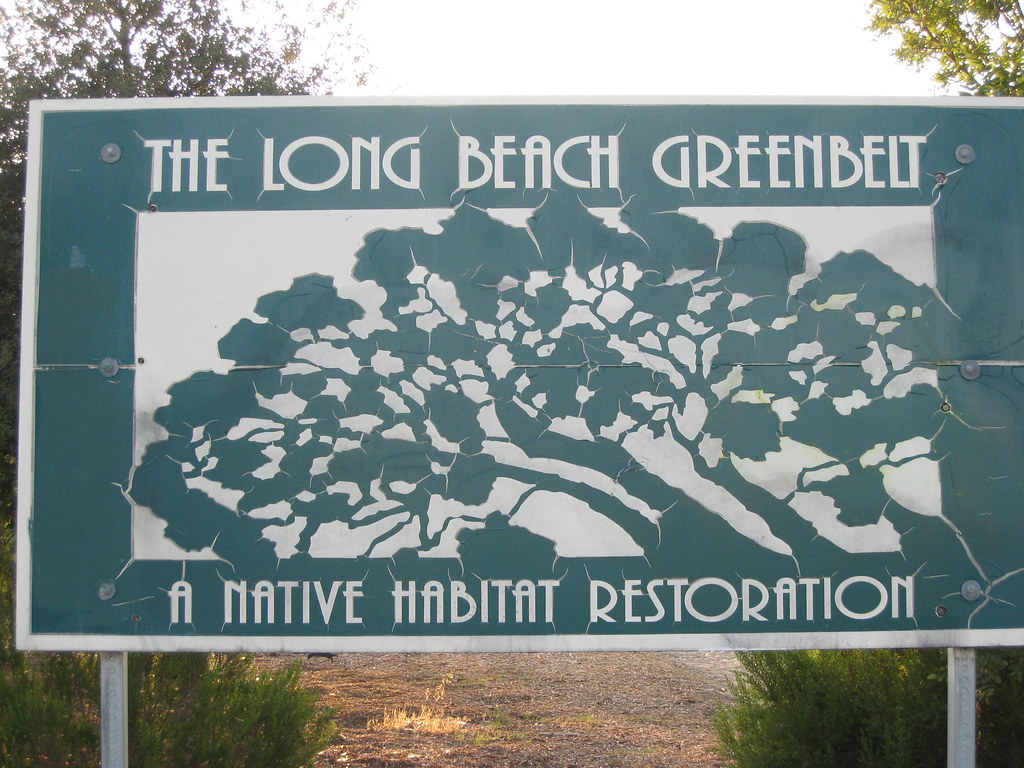
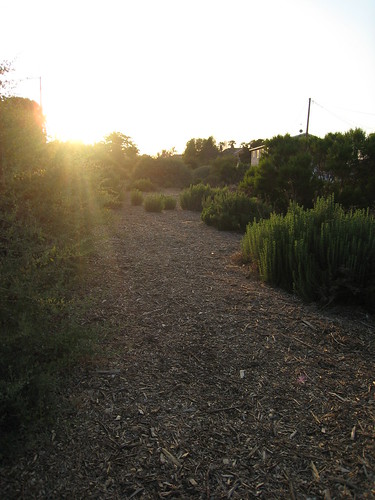
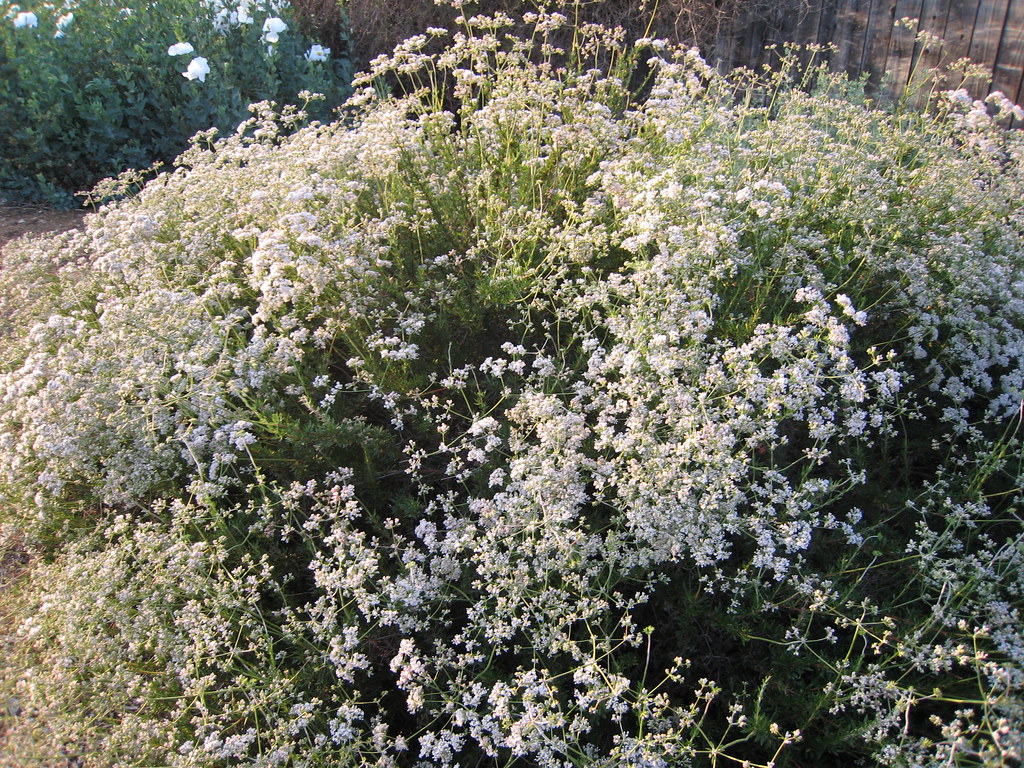
Most of the 2.5-mile bluff (ranging from ~Alamitos to the Belmont Pier) is dominated by non-native vegetation, such as iceplant, or by bare and eroding cliffs. However, a short stretch (0.2 mile) of bluff east of the Long Beach Museum of Art supports a diverse assemblage of native plants, typical of Southern California coastal bluffs. I do not know the history of this stretch--most likely it is the product of restoration efforts by the City of Long Beach. Another short restored area is found further east, near Redondo Boulevard. Perhaps more of the bluffs can be restored!
The restored areas are best appreciated from the top, in Bluff Park. The parts of the bluff closer to the beach are mostly (but not entirely) overrun by nonnative plants.
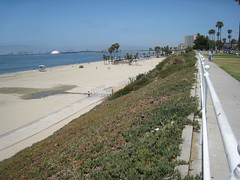
The bluffs in the foreground are dominated by one or two species of iceplant. Diversity is much higher in the restored area in the rear. Also, the more heterogeneous plant structure is better for wildlife.
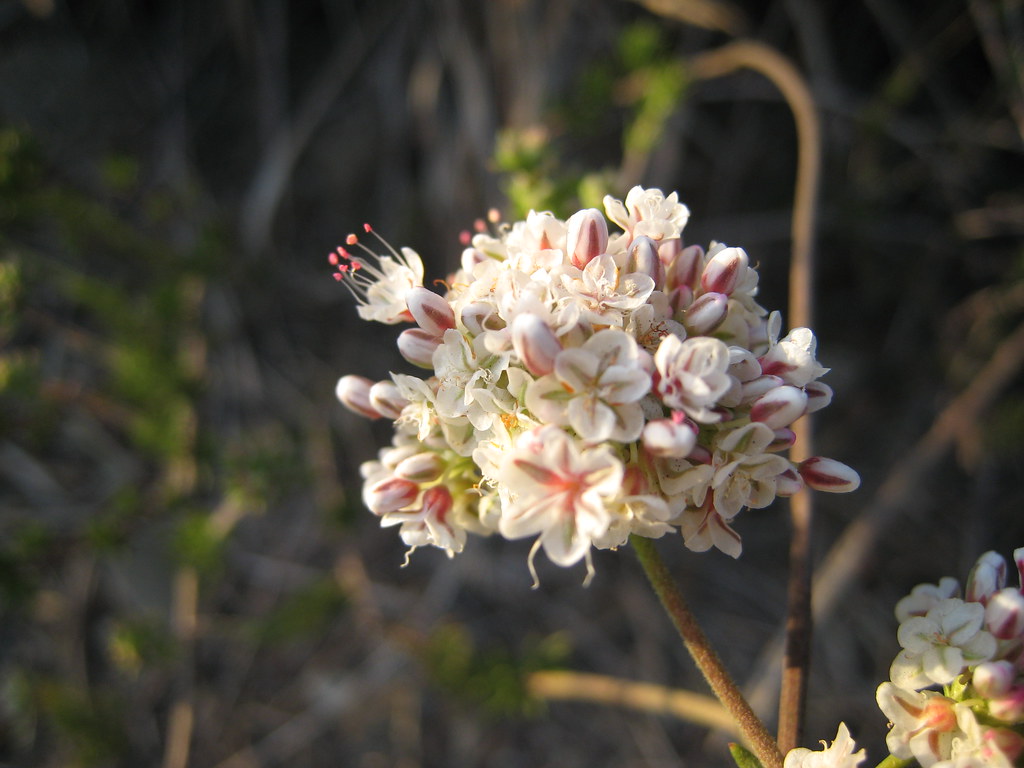
Botanically speaking, these bluffs have much in common with coastal sage scrub communities, with few differences. Specialists, such as seacliff buckwheat (Eriogonum parvifolium), coastal goldenbush (Isocoma menziesii) and coastal liveforever (Dudleya caespitosa) are restricted to these habitats. Unfortunately, I did not encounter any of these rare specailists in the Long Beach bluffs.
Coastal bluff communities face a number of pressures from the natural environment. Plants here typically grow on shallow, nutrient-poor soils that hold little water. Winds are high, furthering dessication and stunting growth. Also, salts in the soil can inhibit many species.
Some of the plants of the Long Beach bluffs:
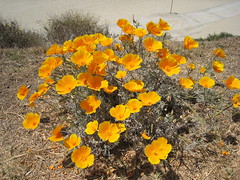
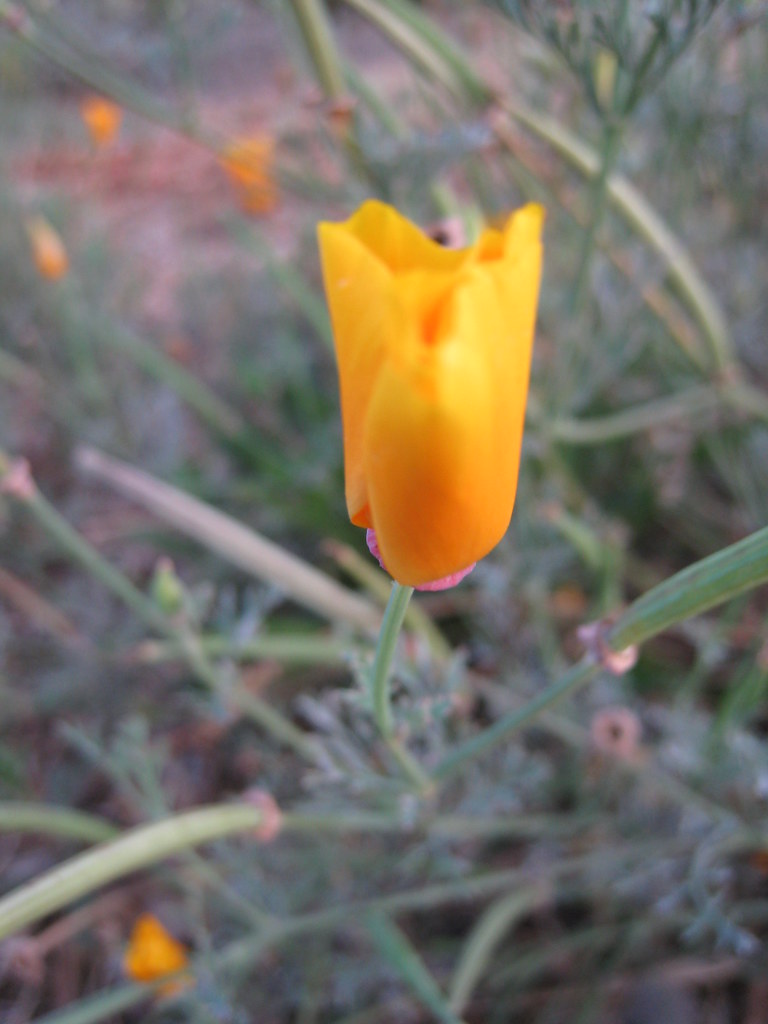
California poppy (Eschscholzia californica)
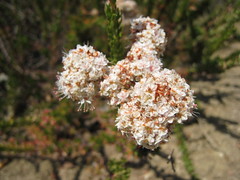
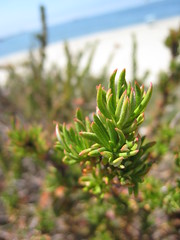
California buckwheat (Eriogonum fasciculatum)
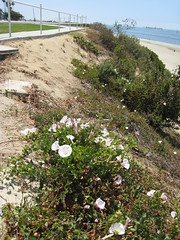
Southern California morning glory (Calystegia macrostegia)
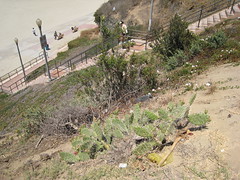
Coastal prickly pear (Opuntia littoralis)

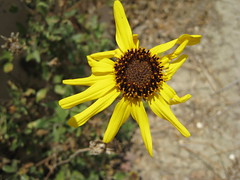
California encelia, or bush sunflower(Encilia californica)
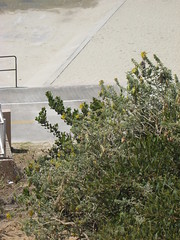
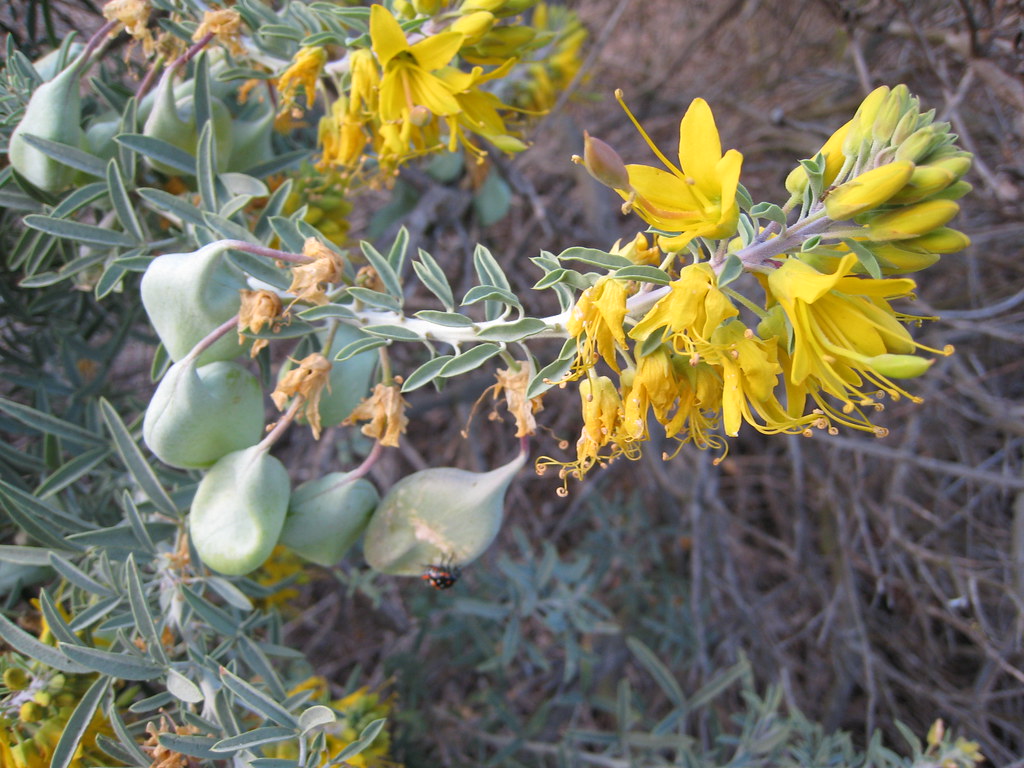
Bladderpod (Isomeris arborea)
Apart from huge numbers of feral cats (see below), it's hard to observe wildlife at the bluffs. Hardly any of the small mammals, lizards, or birds one might expect to find can survive the intense predation from the cats. However, the more exposed parts of the bluff (which are avoided by cats) support nests for cliff swalls [pics forthcoming!]. In addition, the insect fauna is rich here, as these critters are little bothered by the felines.
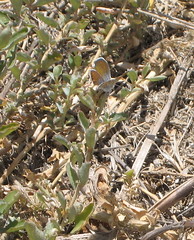
A colorful species of buttefly in the blue family (Lycaenidae). A large number of these insects were attracted to this unidentified plant, a member of the goosefoot family (Chenopodiaceae). In addition, many species of native and nonnative bees, as well as colorful hoverflies are attracted to the blooming plants on the coastal bluff.
Threats
The coastal bluffs in Long Beach face a number of stresses. Development, of course, has erradicated the bluffs west of the Museum. Non-native species (especially the iceplants) completely displace other species and eliminates much of the natural biodiversity.
Some photos of nonnative plants at the bluffs:
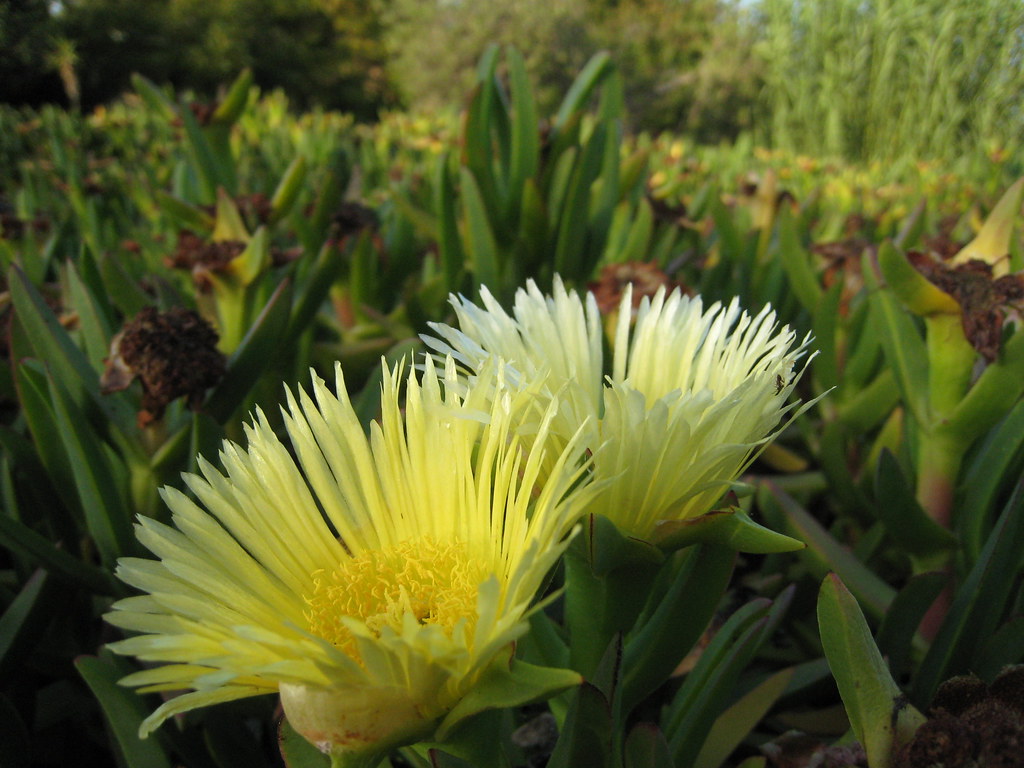
Several kinds of iceplant:
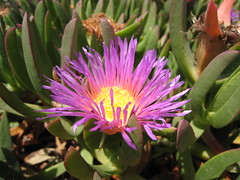
Carpobrotus edulis
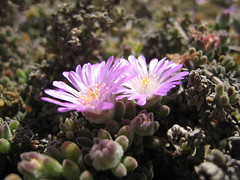
Mesembryanthemum nodiflorum
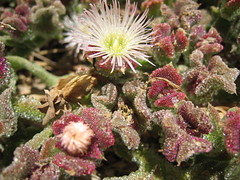
Mesembryanthemum crystallinum
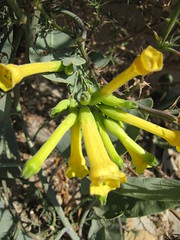
Tree tobacco (Nicotiana glauca)
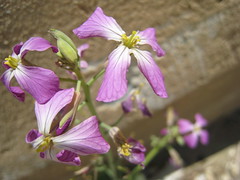
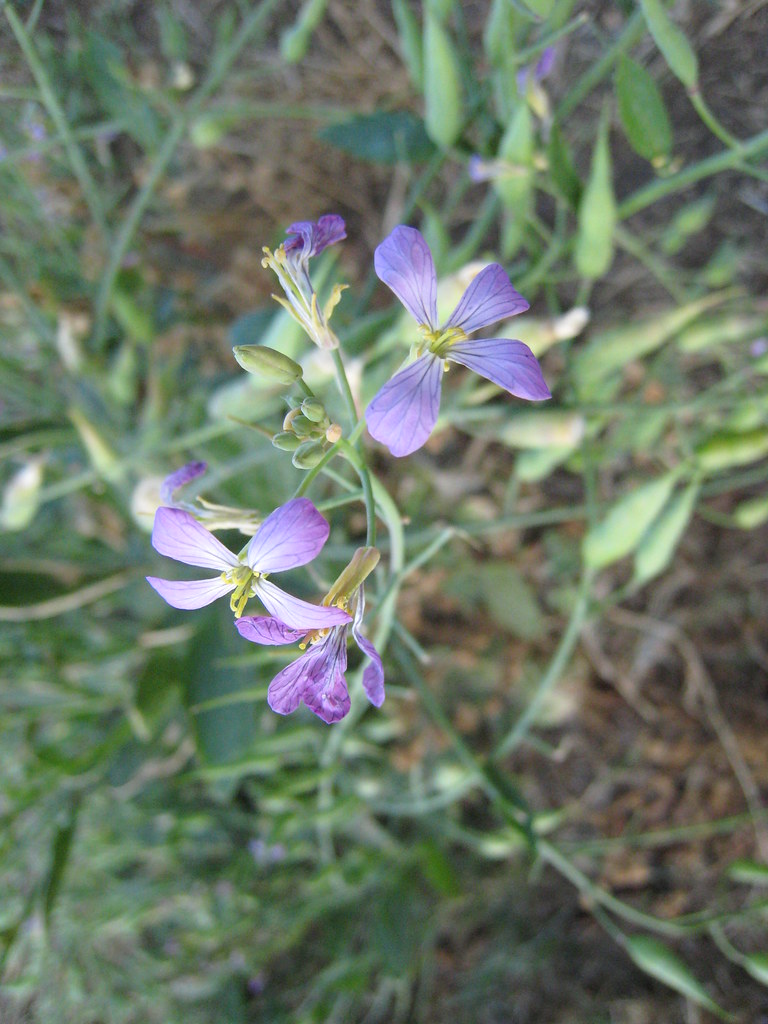
Wild radish (Raphanus sativus)
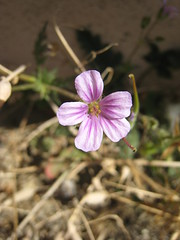
Common geranium (Geranium dissectum)
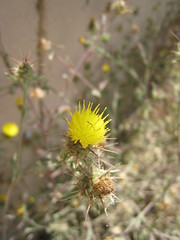
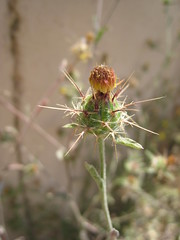
Yellow star thistle (Centaurea solstitialis)
However, there are a number of additional threats in this area not as prevalent in other parks: erosion and feral cats.
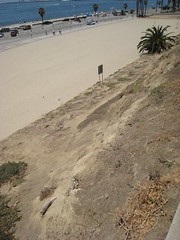
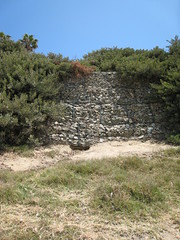
Erosion is a natural process, in which the sandstone bluffs weather away from winds and rain. However, extensive trampling of the bluffs by people has exacerbated erosion to a terrible extent. Furthermore, the trampling elmiinates all vegetative cover (even the iceplants), so no plants are able to stabilize the soils on the bluffs. The resulting damage is costly and threatens safety of vehicles and pedestrians on Ocean Boulevard. Furthermore, the eroded sediment carries nutrients and toxins into the ocean, further harming water quality.

Two members of the bluff's large cat colony
A huge number of cats live in the bluffs of Long Beach. Although they seem to be more common in the shrubs of the restored area, they can be found throughout the entire length of the bluffs. The cats undoubtedly thrive off of the trash and detritus left by careless beachgoers. However, the population is further buoyed by well-intentioned individuals who provide them with food year round.
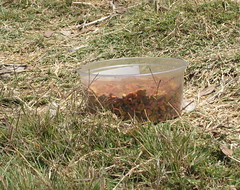
Food purposefully left out for the cat colony
The huge cat population creates a number of environmental problems. They produce large amounts of waste, which is a health hazard and another source of pollution in the ocean. Furthermore, stray cats have decimated populations of native birds and mammals. It is no wonder that the Long Beach bluffs are devoid of some of the fauna you might expect in this habitat (e.g., ground squirrels, birds, lizards).
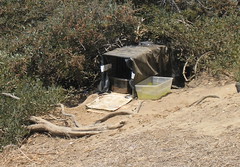
A trap for the cats
Efforts to control the population have been controversial, as few people support outright erradication. Stray cats are generally unsuitable for adoption (unless they are caught as kittens). Sterilization is expensive, time-consuming, and often fail.
Partial list of flora
California encelia (Asteraceae: Encelia californica)
Mulefat (Asteraceae: Baccharis salicifolia)
Yellow star thistle (non-native) (Asteraceae: Centaurea solstitialis)
Bladderpod (Capparaceae: Isomeris aroborea)
California buckwheat (Polygonaceae: Eriogonum fasciculatum)
Coastal prickly pear (Cactaceae: Opuntia littoralis)
Australian saltbush (nonnative): (Chenopodaceae: Atriplex semibaccata)
California poppy (Papaveraceae): Eschscholzia californica)
Crystaline iceplant (non-native): (Azioaceae: Mesembryanthemum crystallinum)
Sea fig (non-native) (Azioaceae: Carpobrotus edulis and C. chilensis)
Slender-leaved ice plant (non-native) (Azioaceae: Mesembryanthemum nodiflorum)
Mustard (non-native) (Brassicaceae: Brassica rapa)
Wild radish (non-native) (Brassicaceae: Raphanus sativus)
Common geranium (non-native) (Geraniaceae: Geranium dissectum)
Tree tobacco (non-native) (Solanaceae: Nicotiana glauca)
Partial list of fauna
Cliff swallow (Petrochelidon pyrrhonota)
Pigeons (Columba livia)
Crows (Corvus brachyrhynchos)
Feral cats (Felis domesticus)
This park is accessible by the Beach bikepath, by the Passport (A and D), and by the 21, 22, and 23 bus routes.